

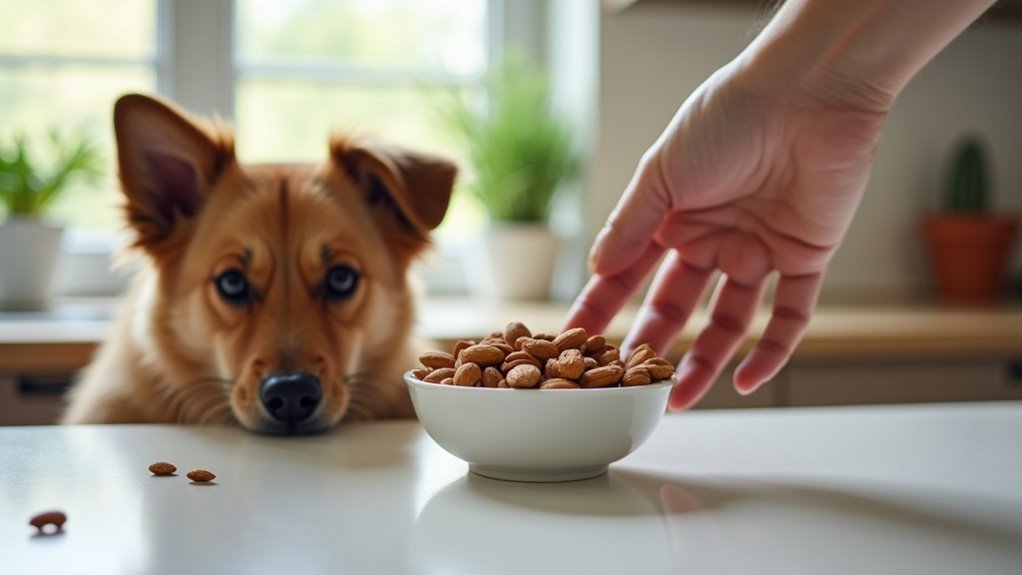

Yes — a dog can eat a few almonds without fatal toxicity, but almonds can cause real problems. Almonds are high in fat, which can trigger vomiting, diarrhea, or pancreatitis in some dogs. Whole almonds pose choking and intestinal blockage risks, especially for small or senior dogs. Flavored or salted almonds and almond products add extra hazards like salt, spices, and sweeteners such as xylitol. If a dog eats almonds, monitor closely and contact a veterinarian for guidance based on the amount and the dog’s size and health.
Can Dogs Eat Almonds?
No, dogs shouldn’t eat almonds as a regular treat, even though almonds aren’t toxic like macadamias. You might feel tempted to share a bite, but your dog’s stomach often can’t handle them well. Almonds can upset digestion, cause gas, or lead to vomiting and diarrhea.
They’re also hard and can become a choking risk, especially for small dogs or fast eaters. Because almonds are high in fat, they can add extra strain over time. Should you want safer rewards, choose homemade almond free snacks that fit your routine.
That helps you stay part of your dog’s behavioral food training without worry. You can still build trust, joy, and good habits with treats that keep your dog comfy, included, and happy.
Are Almonds Toxic to Dogs?
Almonds aren’t considered toxic to dogs, but that doesn’t mean they’re safe for your pup. You might see mild signs like an upset stomach, or more serious trouble like choking, vomiting, or diarrhea should your dog eat too many.
The risk goes up with almond products, flavored nuts, and smaller dogs, so it helps to know what symptoms to watch for straight away.
Almond Toxicity Levels
Although almonds aren’t classified as toxic for dogs, they still aren’t a safe treat. You might hear that a tiny piece is low risk, but your dog’s size, chewing style, and stomach matter more. Almond metabolomics shows their fats and fibers don’t fit canine digestion well, which can stir an immune response and upset the gut.
| Amount | Risk |
|---|---|
| 1 to 2 plain almonds | Usually low toxicity, but still unsafe |
| More than a few | Higher chance of stomach trouble or blockage |
| Flavored or salted almonds | Extra risk from added ingredients |
Signs Of Almond Poisoning
In case your dog ate almonds, the initial signs usually show up in the stomach and belly. You might notice drooling, vomiting, loose stools, gas, or a swollen, tense tummy.
That symptom timeline can start within hours, so don’t brush off a calm moment as proof that all’s well.
- Watch for belly pain, like whining, hiding, or a hunched posture.
- Check for choking, gagging, coughing, or trouble swallowing, especially with whole almonds.
- Call your vet promptly should you see weakness, repeated vomiting, or no appetite.
Almonds aren’t true toxin myths and harm often comes from irritation, blockage, or extra fat. In case your dog seems off, trust your gut and get help.
Why Almonds Can Upset Your Dog’s Stomach
Almonds can upset your dog’s stomach because they’re hard for dogs to digest, and that can lead to vomiting, diarrhea, gas, or belly pain.
They’re also high in fat, which can make an upset stomach worse and could leave your dog feeling sluggish.
On top of that, their size and texture can create a choking or blockage risk, especially for smaller dogs.
Digestive Irritation Signs
Once a dog eats almonds, the stomach can start to feel upset because dogs don’t break them down well.
You could notice digestive discomfort soon after, especially in case your dog has gut sensitivity. Watch for signs like these:
- Vomiting or gagging after a bite
- Loose stool or sudden diarrhea
- Gas, belly pain, or a turned-away appetite
These signs can show up hours later, so your dog may seem fine at first and then act off.
Should you see repeated vomiting or diarrhea, you should pay close attention and keep your dog close. A calm routine helps, and your dog feels safer as long as you stay nearby.
Whenever symptoms linger, it’s smart to call your vet for guidance.
High Fat Content
That rich fat in almonds can strike your dog’s stomach hard, and it can do more than cause a little tummy trouble. Whenever you share almonds, you’re giving a snack with high calorie density, so your dog gets a lot of energy in a small bite. That can overwhelm fat metabolism, especially provided your dog isn’t used to rich foods.
The result can be nausea, loose stool, gas, or a sore belly that makes your pup seem off. Because dogs process fat differently than people do, even a small amount could feel heavy for their system. Assuming your dog has a sensitive stomach or a history of pancreatitis, this risk matters even more. So, provided you want to keep your dog comfortable, skip almonds and choose a lighter treat instead.
Choking And Blockage Risk
Even a small almond can be tricky for your dog because its hard shape and size can turn snack time into a choking scare. You’re not being dramatic when you worry; almonds create real size hazards, especially for small mouths and fast eaters.
Should one slip down wrong, it can cause airway obstruction or get stuck in the throat or gut. That’s why a tiny treat can turn into a scary vet visit.
- Hard shells and smooth nuts don’t decompose well.
- Gulping dogs might inhale or lodge the nut.
- Blockage can bring pain, vomiting, and panic.
Whenever you share food, you want your pup safe with the pack. So keep almonds out of reach, and watch closely should one get stolen.
Signs Your Dog Ate Too Many Almonds
Provided your dog ate too many almonds, the initial signs often show up as stomach trouble, and they can range from mild to more serious fast.
You could notice vomiting, loose stool, gas, or a sore belly.
Your dog could act tired, skip meals, or seem restless, and these behavioral changes often tell you something feels off.
In some dogs, the signs start hours later, so don’t assume all is well right away. Keep an eye on hydration tracking too, because diarrhea or repeated vomiting can dry your dog out quickly.
You might also see drooling, lip licking, or trouble settling down.
Should your dog looks weaker, pants more, or seems deeply uncomfortable, those are stronger clues that the almonds upset their system and need close attention.
What to Do If Your Dog Eats Almonds
Provided your dog eats almonds, start by watching closely for vomiting, diarrhea, choking, or any sign of belly pain. You should call your veterinarian right away should your dog ate a lot, ate flavored almonds, or seems unwell.
To help prevent this from happening again, keep almonds and almond products out of reach and store snacks where your dog can’t sneak a bite.
Monitor For Symptoms
Once your dog has eaten almonds, the next step is to watch closely for any signs that something’s wrong. Stay calm, because you’re doing the right thing for your buddy. Look for delayed symptoms that can show up hours later, like vomiting, diarrhea, gas, or a sore belly. Also notice behavioral changes such as tiredness, hiding, restlessness, or a skipped meal.
- Check for coughing, gagging, or trouble swallowing.
- Watch for repeated bathroom trips or loose stool.
- Notice if your dog seems painful, weak, or unusually quiet.
Keep your dog in a familiar space and make sure fresh water is nearby. Provided you and your pup usually settle in together after a scare, this quiet watch time can help you spot trouble sooner and keep the moment from feeling so stressful.
Contact Your Veterinarian
Even though almonds aren’t usually toxic, your veterinarian should still hear from you right away because the real risk depends on how much your dog ate and what kind of almonds they were. Call with details about plain, salted, flavored, or chocolate-covered pieces, and share your dog’s size, symptoms, and at what point the snack happened. Your vet can tell you whether you need to watch at home or come in fast.
Should your dog be choking, vomiting hard, has belly pain, or seems very tired, use your emergency contacts and head for help now. Keep your insurance options handy too, since prompt care feels easier once you know what support you have. You’re not overreacting, you’re caring for your buddy.
Prevent Future Access
To keep this from turning into a repeat snack raid, start at moving almonds and almond products far out of your dog’s reach. Use secure storage in high cabinets, and switch to childproof containers for pantry shelves your pup can nose open.
Then build a simple routine that keeps your home in sync:
- Check bags, counters, and couch sides after every snack.
- Put almond butter, flour, milk, and trail mix away right away.
- Remind family and guests not to drop treats.
If you live with a curious dog, you know one loose almond can vanish fast. So keep trash closed, clean spills quickly, and make the kitchen a no-go zone during snack time. That small habit helps you protect your dog and feel calm at home.
Why Salted and Flavored Almonds Are Riskier
Salted and flavored almonds are riskier because they often bring extra dangers that plain almonds do not, and those added ingredients can hurt your dog fast. Whenever you share a snack, you mightn’t notice seasoned coatings, but your dog’s body does. Salt can push sodium exposure too high, and that can leave your pup thirsty, weak, or upset.
Sweet or spicy flavors could hide garlic, onion, sugar, or even xylitol, which can make a simple bite much more serious. Should you want to protect your dog and still feel like you’re treating them, choose plain, dog-safe snacks instead. That way, you keep snack time kind, calm, and safe for the whole pack.
Almond Choking and Blockage Risks
Most of the time, the biggest danger with almonds isn’t toxicity, it’s their size and hard texture.
Whenever you give one to your dog, it can slip into the airway and cause airway obstruction, or get stuck in the throat and make swallowing hard. Should it move deeper, it could block the gut and lead to intestinal perforation, which requires fast care.
You and your pup deserve safer snack moments, so watch for these warning signs:
- Coughing, gagging, or pawing at the mouth
- Vomiting, belly pain, or no stool
- Sudden distress after chewing or gulping
Because almonds are firm and slippery, even one can create trouble for a small dog.
In case your dog breathes oddly or won’t eat, call your vet right away.
Which Dogs Should Avoid Almonds?
Some dogs should steer clear of almonds completely, even though a tiny bite couldn’t appear like a big deal initially. In case your dog has a sensitive stomach, you’ll want to skip them, because almonds can upset digestion fast.
Senior dogs might also struggle more, since their bodies often handle rich foods less easily. You should be extra careful with brachycephalic breeds, too, because they can have a tougher time with chewing and swallowing.
Small dogs face added risk since even one almond can feel like a stubborn pebble in the wrong place. Dogs with a history of pancreatitis, vomiting, or food allergies also shouldn’t get almonds.
Whenever you want your pup to feel included, safer treats help you keep snack time happy and worry-free.
How Much Almond Is Too Much?
A plain almond or two is usually where the line starts, but the exact amount that becomes too much depends a lot on your dog’s size, chewing style, and stomach sensitivity.
For most dogs, that means you should treat almonds as an almost-never snack, not a regular reward.
Small dogs can run into trouble fast, while larger dogs might only seem fine at first.
- Watch portion sizes closely.
- Consider age considerations, since puppies and older dogs can react more easily.
- Call your vet should your dog eat more than a tiny amount, because tummy upset can show up later.
Should your dog be sensitive, even one almond could be enough to cause worry.
Safer Dog Treats Instead of Almonds
Should you’re looking for a safer snack, your best move is to skip almonds and reach for treats made just for dogs. You’ll both feel better whenever you choose options that match your pup’s needs.
Try small pieces of cooked chicken, carrot coins, apple slices without seeds, or plain pumpkin. These treats are easy to chew and gentle on most stomachs.
In case you like making homemade treats, keep the recipe simple with dog-safe ingredients and no added sugar, salt, or xylitol. For training rewards, use tiny bites so you can praise often without overfeeding.
You can also buy store treats with short ingredient lists. That way, you remain in control, and your dog gets a snack that fits right into your shared routine.
When to Call the Vet
Even although you choose safer treats for your dog, it helps to know exactly at what point almonds need a vet’s attention. Should your dog shows emergency signs like choking, trouble breathing, swelling, or collapse, call right away. In case your pup ate more than one or two almonds, or any flavored nut, ask for help fast.
- Watch for vomiting, diarrhea, belly pain, or unusual tiredness.
- Use simple post exposure firstaid: remove the food, offer water, and keep your dog calm.
- Contact the vet in case symptoms last, or should you see shaking, weakness, or nonstop drooling.
You’re not overreacting by reaching out. You’re protecting your dog’s comfort, and that’s what caring dog people do.
Frequently Asked Questions
Can Puppies Eat Almonds Safely?
No, you shouldn’t feed puppies almonds. Their puppy digestion is sensitive, and a dietary shift needs safer foods. You’ll protect your pup better by avoiding almonds, since they can cause choking, upset stomachs, or intestinal blockages.
Are Almond Shells Dangerous for Dogs?
Yes, almond shells are dangerous for dogs; they can cause choking, blockage, and miserable tummy drama. While almond toxicity is not the issue, shell ingestion can still land you in the vet’s waiting room fast.
Can Dogs Have Almond Butter in Treats?
You shouldn’t give your dog almond butter in treats. The almond texture and added ingredients can upset digestion or trigger choking. Choose treat alternatives like pumpkin, carrot, or plain peanut butter instead.
How Long After Almonds Do Symptoms Start?
Symptoms can start within a few hours after eating almonds, though some dogs may not show signs until later that day. Watch for the time symptoms begin and how they progress, and call your vet if you notice vomiting, diarrhea, or lethargy.
What Should I Give My Dog Instead?
You can give your dog crunchy carrots, crisp green beans, apple slices without seeds, or a few blueberry gems. Choose nutritious alternatives and safe portioning, so your pup feels included, healthy, and happily rewarded.