

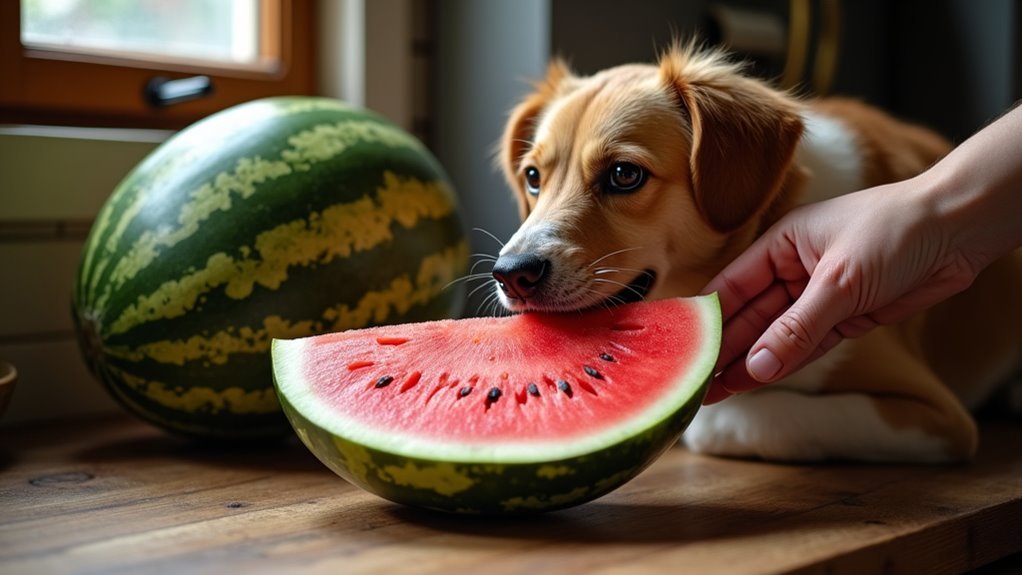

Yes — watermelon rind is not ideal for dogs. The tough, fibrous rind can cause stomach upset, choking, or intestinal blockage. Small amounts of plain flesh are safe, but rind should be avoided. Cut seeds out and serve only bite-sized pieces of ripe flesh as an occasional treat. Puppies, small breeds, and dogs that gulp food need extra caution around picnic scraps.
Is Watermelon Rind Safe for Dogs?
No, watermelon rind isn’t safe for dogs, even though it’s not usually toxic. You want your dog to enjoy treats, and that’s fair, but rind can be a bad match. Its tough texture doesn’t suit most texture preferences, and it might bother dogs with sensitive stomachs or pet allergies.
You can feel good appreciating the red flesh is the part that usually fits dog-friendly snacking. Still, the rind stays risky because it’s hard to chew and hard to decompose. In case your dog already nibbled some, watch closely and call your vet should you notice vomiting, diarrhea, or belly pain. Whenever you share watermelon, remove the rind initially and offer only small, plain pieces. That keeps treat time simple, safe, and kind.
Why Watermelon Rind Can Be a Problem
Watermelon rind can cause trouble for a few simple reasons, and most of them come down to its tough, fibrous make-up.
When you look at a texture comparison, you can see it feels far less tender than the juicy flesh your dog enjoys. That roughness makes it harder to break down in the stomach, so it could sit there and upset your dog’s gut.
It can also trap dirt and moisture, which raises the chance of microbial contamination should the rind wasn’t washed well. Because of that, even a small bite can leave your dog feeling off.
You want safe, simple treats, and the rind just doesn’t fit that role. The flesh is the friendlier choice, while the rind brings avoidable digestive strain.
Choking Risks From Watermelon Rind
A thick rind can turn into a choking risk fast because its size and shape make it hard for you to chew safely.
In case you swallow a large piece, it can get stuck in your throat or move down and cause a blockage.
That’s why you should keep rind out of your dog’s reach and only offer small, soft watermelon flesh instead.
Rind Size And Shape
Upon a dog grabbing watermelon rind, the size and shape of the piece can change the risk fast. In case you offer a thick chunk, it could sit awkwardly in the mouth. A long strip can fold, twist, and slip back toward the throat. Smaller, rounded pieces usually feel less risky, but you still want to keep them tiny and even.
| Shape | Risk | Best move |
|---|---|---|
| Thick slab | Higher | Skip it |
| Thin strip | Higher | Trim it |
| Small cube | Lower | Supervise it |
Slice thickness matters because bulky pieces ask more of your dog’s mouth. Edge curvature matters too, since sharp corners can catch more easily. Once you keep pieces small and smooth, you help your pup feel safer and stay part of the treat moment.
Chewing And Blockages
Even though a rind piece looks small and neat, chewing it can still turn into trouble fast. You might suppose your dog can handle it, but watermelon rind has poor chew durability and can slip back in a thick, stubborn strip. Then it can catch in the throat or pack down in the gut.
That’s why dog dentistry matters here too, since strong teeth don’t make tough rind safe to swallow. In case your dog gulps pieces instead of grinding them, the risk rises quickly.
Smaller dogs face even more danger because a chunk can lodge and block food from moving. So should your dog grabs rind, stay calm, watch closely, and contact your vet right away should vomiting, gagging, bloating, or pain shows up.
How Rind Affects Digestion
Whenever a dog eats watermelon rind, the trouble usually starts in the digestive tract, where that tough outer layer can slow everything down and upset the normal flow of digestion.
You might suppose the rough texture adds harmless bulk, but your dog’s stomach has to work much harder to break it apart. That can lead to poor fiber fermentation, so the gut microbiome doesn’t get the easy support it gets from softer foods.
Instead, the rind can sit in the belly too long, pull in water, and make the gut feel off balance. Because it’s so firm and fibrous, it could also irritate the intestinal lining as it moves through.
For your dog, that means extra strain, not a snack that feels kind or familiar.
Signs Your Dog Ate Watermelon Rind
Should your dog ate watermelon rind, you could notice choking, gagging, or repeated swallowing as the pieces get stuck or irritate the throat.
You may also see vomiting or diarrhea soon after, since the tough rind can upset the stomach.
Watch for belly pain, bloating, or a tense, uncomfortable posture, and call your vet promptly should any of these signs show up.
Choking And Gagging Signs
A dog that swallows watermelon rind could start showing choking and gagging signs fast, and that can feel scary to watch. You might hear harsh coughing, see repeated gagging, or notice your dog pawing at the mouth. Sometimes the neck stretches, breathing gets noisy, or saliva builds up.
Keep airway monitoring steady and stay calm while you check for movement and sound. Should your dog can’t swallow, cries out, or seems panicked, treat it like an urgent problem.
Gentle reflex assessment can help you notice whether the throat still responds, but don’t press too hard. Because rind is tough and sticky, small pieces can still catch in the throat. If signs don’t fade quickly, call your vet right away for guidance and next steps.
Vomiting Or Diarrhea
- Watch for loose stool after the snack.
- Notice repeated vomiting or dry heaving.
- Call your vet in case it keeps going, because digestive testing could help find the cause.
If your dog seems tired or won’t drink, act quickly.
Even though watermelon has hydration benefits, the rind can still throw off your dog’s gut.
Stick close, offer fresh water, and keep track of when symptoms started so you can share clear details with your vet.
Abdominal Pain And Bloating
Since rind is tough to digest, it can trap gas and slow the gut, so gas management becomes crucial fast. Offer no more food until you consult with your vet, and watch for restlessness, drooling, or repeated attempts to lie down. Should the belly feels hard or your dog keeps acting sore, get help right away. You deserve peace, and your dog deserves prompt care.
What to Do If Your Dog Eats Rind
Should your dog eats watermelon rind, stay calm and act quickly. Initially, take the rind away and check your dog’s mouth for stuck pieces. Then use post ingestion monitoring so you can spot vomiting, diarrhea, or tummy pain promptly. In case your dog only nibbled a little, keep a close eye and offer water. In the event your dog ate a large piece, call your vet and describe the amount.
- Watch for changes in energy, appetite, or bathroom habits.
- Note any behavioral causes, like scavenging or begging, so you can prevent repeats.
- Keep the leftover rind out of reach and share only plain flesh next time.
You’re not alone in this. Quick, calm action helps you protect your dog and feel more prepared.
When Watermelon Rind Is an Emergency
Should your dog be choking on watermelon rind, treat it as an emergency right away. You might see gagging, pawing at the mouth, coughing, or trouble breathing, and these signs need fast help. Were your dog to swallow a large piece and then start vomiting, bloating, or acting painful, call your vet or an emergency clinic without delay.
Choking Signs
A dog who’s choking on watermelon rind needs help right away, and the signs can come on fast. You might see gagging, pawing at the mouth, or panic, and you could hear noisy breathing or no sound at all. Silent choking can look calm, but it’s still urgent.
- Watch for blue gums or trouble breathing.
- Look for repeated retching or drooling.
- Notice if your dog can’t swallow or settle down.
Should you spot these signs, act fast and call your vet. Preventive training helps, too, because a dog that learns to drop food and wait is safer around treats. You’re not overreacting when you step in promptly; you’re protecting your dog and keeping your pack feeling secure.
Digestive Blockage
Once choking seems to pass, the worry doesn’t always end there, because swallowed watermelon rind can still get stuck farther down in your dog’s gut.
Should that happen, you could face an intestinal obstruction, and it can build quietly at the outset. You may see vomiting, a swollen belly, straining, or your dog acting tired and uncomfortable.
Those signs matter because the rind’s tough fiber effects make it hard to decompose, especially in smaller dogs.
Emergency Vet Care
Watching your dog after a bite of watermelon rind can feel stressful, but some warning signs mean you shouldn’t wait and see. Should your dog choke, keep vomiting, seem bloated, or act weak, call your vet right away. Your emergency protocol should start fast, because triage priorities focus on breathing, pain, and blockage risk.
- Check for coughing, gagging, or trouble breathing.
- Watch for repeated vomiting, no stool, or belly pain.
- Call the clinic and say what was eaten, how much, and at what time.
In case your dog is small, young, or already sensitive stomach-wise, act even sooner. You’re not overreacting by asking for help. You’re protecting your dog, and that’s what caring people do. Should there be doubt, let the vet guide you.
Is Watermelon Flesh Safer for Dogs?
Yes, watermelon flesh is much safer for dogs than the rind, as long as you prep it the right way. You can share this juicy treat and feel good about it. The flesh offers hydration benefits, and its gentle texture is easy on your dog’s mouth. Still, you should notice the sugar content, so keep it as a feel-good snack, not a meal.
| Flesh | Why it works |
|---|---|
| Bright red | Sweet and soft |
| Seedless | Safer to chew |
| Chilled | Extra invigorating |
| Cubed | Easy to share |
| Plain | No added risk |
You and your pup can enjoy that sunny bite together whenever you remove seeds and rind. That simple prep keeps snack time friendly, safe, and full of tail-wagging confidence.
How Much Watermelon Is Safe for Dogs?
A small serving of watermelon can be a happy little treat for your dog, but the amount matters a lot. You want to keep portion sizes small so you stay within sugar limits and avoid tummy trouble.
For most dogs, a few bite-sized pieces are enough, and smaller dogs need even less.
- Tiny dogs: 1 to 2 small cubes
- Medium dogs: 3 to 4 small cubes
- Large dogs: a few more, but still modest
You can consider watermelon as a bonus snack, not a meal. So, in case your dog already gets treats that day, trim the serving back.
Whenever you share smartly, you help your buddy enjoy the fun without upsetting digestion. That balance keeps treat time safe and joyful.
How to Prepare Watermelon for Dogs
To keep watermelon safe and easy for your dog to enjoy, start selecting a ripe slice and cutting away every bit of rind and any seeds you can find. Then trim the flesh into tiny cubes, so you can keep portion control simple and calm. Should your dog be small, make the pieces even smaller, because that helps each bite go down smoothly.
Next, rinse the fruit briefly and pat it dry, since a cleaner treat feels better to handle. Serve it plain, with no salt, sugar, or extras, and watch the serving temperature so it’s cool, not icy. Whenever you offer it this way, your dog gets a revitalizing snack, and you get peace of mind too.
Other Dog-Safe Fruits
Once you’ve got watermelon ready the safe way, it helps to know that plenty of other fruits can give your dog the same happy, fresh-tasting treat. You can build a little fruit routine that feels safe and shared. Try these dog-friendly picks:
- Blueberries for tiny, easy bites.
- Apples, with seeds and core removed.
- Bananas in small slices for a soft snack.
These berry choices fit well whenever you want variety without stress.
You can also offer pear or cantaloupe in moderation. Just keep portions small so your pup stays comfy. With citrus caution, skip oranges provided they upset your dog’s stomach, and never give grapes or raisins. Whenever you choose simple fruit treats, you’re giving your buddy something tasty that keeps snack time easy for both of you.
Which Dogs Should Avoid Watermelon?
Some dogs should skip watermelon altogether, even though the juicy flesh can be a sweet treat for many pups. Should your dog have a sensitive stomach, even a small serving can leave them uneasy.
You should be extra careful with senior dogs, because older bodies might handle new foods less gently and recover more slowly. Diabetic dogs also need caution, since watermelon has natural sugar that can affect their meal plan.
Were your dog to have a history of bloating, vomiting, or diarrhea, it’s smarter to pass. The same goes for dogs who gulp food without chewing well, because they’re more likely to get into trouble.
Whenever you’re unsure, choose a safer snack and keep your pup in the happy pack.
What Vets Say About Watermelon Rind
Vets usually say you shouldn’t feed your dog watermelon rind, because its tough texture can cause choking, stomach upset, or even a blockage.
They do recommend plain watermelon flesh in small, seedless pieces instead, so your dog gets the treat without the risky outer layer.
In case your dog already ate rind, your vet can help you judge whether you need to watch for symptoms or seek care right away.
Vet Safety Concerns
As you inquire what vets believe about watermelon rind, the answer is pretty clear: they usually say to keep it out of your dog’s bowl. From a veterinary standpoint, the rind brings avoidable risks, so clinics use safety protocols that favor the soft flesh only. You’re not being overly cautious whenever you listen.
- The tough skin can choke your dog.
- Swallowed pieces might block the intestines.
- The rough texture can trigger vomiting or diarrhea.
If your dog snuck a bite, stay calm and watch closely. Vets want you to notice belly pain, bloating, or repeated gagging promptly. That kind of care helps you protect your pet and feel confident in your crew.
Recommended Serving Guidance
Now that you know why watermelon rind can cause trouble, the next question is how much, whether at all, your dog should actually get. Vets usually say you ought to skip the rind completely and give only peeled, seedless watermelon flesh.
Should you want a treat, keep portion sizes small, about a few tiny cubes for a toy dog and a little more for a larger one. Keep serving frequency low, too, because watermelon still adds sugar and water to the diet. You can offer it once in a while, not every day.
Before you share any piece, check that it’s soft, clean, and free of seeds. That way, you help your dog join in safely, and you avoid a messy trip to the vet.
Summer Watermelon Safety Tips
At any time summer heat calls for a cool snack, watermelon can be a great treat for your dog, but you’ll want to serve it the right way. You and your pup can share the moment safely with a few smart hydration tips and picnic precautions.
To begin, cut off every bit of rind and seed, since those pieces can upset your dog’s stomach. Then keep portions small, so your buddy gets a revitalizing bite without too much sugar.
- Chill plain fruit pieces for a cooler treat.
- Offer watermelon after playtime, not during frantic gulping.
- Watch your dog closely at outings and toss rind scraps right away.
With simple steps like these, you help your dog stay happy, included, and safe at every sunny gathering.
Frequently Asked Questions
Can Puppies Chew Watermelon Rind Safely?
No, you shouldn’t let your puppy chew watermelon rind; that tough treat can turn risky fast. With puppy supervision, you can offer safe texture introduction through tiny, seedless watermelon flesh instead, keeping your pup included and protected.
Does Cooked Watermelon Rind Become Safe for Dogs?
No, cooked watermelon rind still isn’t safe for your dog. Cooking might soften the texture and change the flavor, but it does not remove choking or blockage risks. Offer only plain watermelon flesh instead.
Are Watermelon Seeds More Dangerous Than the Rind?
No, you should not worry more about watermelon seeds than the rind; both can cause trouble. Seeds rarely show seed toxicity, but they can still trigger digestive blockage, while rind more often causes choking, upset, and obstruction.
Can Watermelon Rind Cause Gas in Dogs?
Yes. If your dog eats watermelon rind it can cause gas because the rind is hard to digest and may trigger digestive upset. It can also carry bacterial contamination. Skip the rind and offer the flesh instead.
Is Frozen Watermelon Rind Safe for Teething Puppies?
No, you should not give your puppy frozen watermelon rind for cold teething or texture enhancement. You risk choking, intestinal blockage, and stomach upset. Offer puppy safe chews instead and ask your veterinarian for guidance.