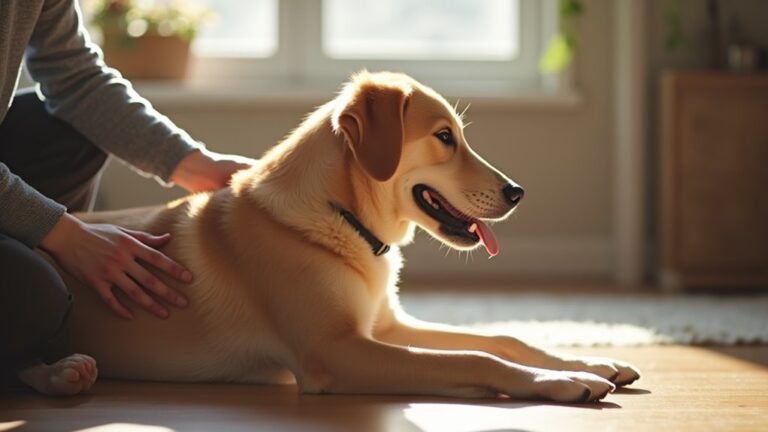

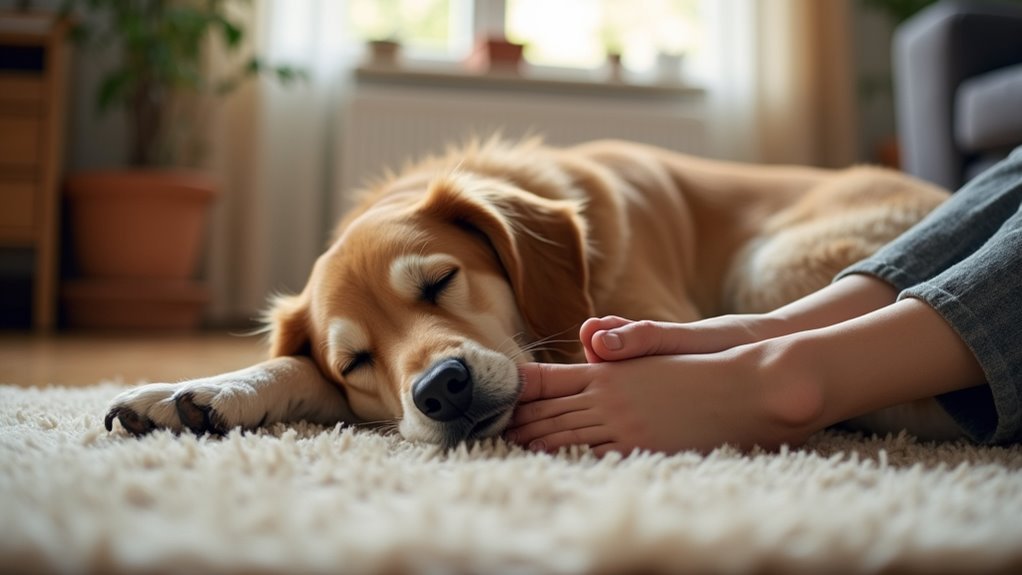

Dogs that sleep at your feet usually do so out of trust, comfort, and habit. Your feet provide warmth, familiar scent, and a safe spot close by without crowding personal space. Some dogs prefer closeness and companionship, while others position themselves to stay alert and monitor the environment. Age, mood, and daily routine influence this behavior over time. Small cues like body posture, restlessness, or choice of spot reveal which reason fits your dog best.
Why Does My Dog Sleep at My Feet?
Whenever your dog curls up at your feet, it usually means they’re seeking closeness, comfort, and trust all at once. You’re their safe person, and your presence helps them feel settled during sleep bonding.
That spot lets them stay near you without crowding you, so they can rest while still feeling connected. Your feet also carry a familiar scent preference, and that scent can feel calming in a quiet, reassuring way.
In many homes, this habit grows from routine. Your dog learns that your feet are a steady place to land, especially at night. So if they choose that little space, they’re telling you they feel at home with you, and that belonging matters to them deeply.
Why Dogs Sleep at Your Feet for Comfort
Often, your dog sleeps at your feet because that spot feels safe, warm, and close without being too crowded. You give off scent comfort, and that familiar smell can calm your dog quickly. Your feet also match your dog’s temperature preference, since the area can feel cooler or warmer than the rest of the bed.
So, your dog gets comfort without losing personal space. That balance matters a lot. It lets your dog stay near you, relax deeply, and still feel free to shift as required. Whenever your dog curls there, it often means your presence helps them settle.
In a way, your feet become a small home base, and that can feel deeply reassuring for both of you.
Why Dogs Naturally Sleep Close By
That cozy spot at your feet is more than a simple habit, because it also connects to how dogs naturally live and rest near their social group. Whenever you lie down, your dog often follows that old pull to stay close, just like pack members once did.
This evolutionary nesting behavior helps your dog feel settled and connected. In addition, your feet give off warmth, and that thermoregulatory preference can make the area feel just right.
Your scent also adds comfort, so your dog gets a familiar, safe feeling without crowding you. As a result, sleeping nearby lets your dog relax while still keeping that sense of belonging.
For many dogs, closeness isn’t random. It’s a quiet way to say, “I’m with you,” and that feels good on both ends.
Does Sleeping at Your Feet Mean Protection?
Yes, sometimes it can mean protection, because your dog could be choosing that spot to keep watch while still staying close to you.
When your dog settles at your feet, you might notice a protective posture and calm alert positioning. That doesn’t always mean your dog feels worried. Often, it means your dog feels safe enough to rest but ready to notice movement.
Your dog might like being near you, and your feet give a clear view of the room. This choice can help your dog feel useful and connected at the same time.
How Pack Instincts Shape Feet-Sleeping
Pack instincts help explain why your dog could love sleeping at your feet, even though your home feels quiet and safe. Whenever you move, your dog can stay close, and that closeness feels natural in a social group. In pack hierarchy, your feet can feel like a steady, trusted spot without crowding you. That’s where proximity signaling comes in, because your dog shows, “I’m with you,” while still resting.
- Your dog keeps contact with the group.
- Your dog stays ready whenever you shift.
- Your dog feels calmer near familiar scent.
- Your dog follows an old comfort pattern.
What Different Dog Sleep Positions Mean
Often, your dog’s sleep position tells you more than you could envision.
Whenever your pup curls into a ball, they might be saving warmth and feeling tucked in.
Should they stretch out on their side, they often feel safe, relaxed, and ready for deep REM cycles.
A belly-up pose usually shows total comfort, since your dog leaves the most vulnerable parts open.
Then there’s the loaf, where paws stay under the body; that sleep posture can mean your dog wants rest but still stays alert enough to join you quickly.
Were your dog to sleep near your feet, they might simply want closeness and a steady place in your pack.
Through watching these positions, you can better understand their comfort, mood, and sleepy little habits.
When Sleeping at Your Feet Signals Anxiety
Should your dog sleeps at your feet, that can be sweet and reassuring, but it can also point to worry whenever the habit feels intense or new. In case your dog clings there after a change, you might notice night pacing, restless panting, whining, or trouble settling. That’s often your dog asking for safety close to you.
- Watch for sudden sticking to your ankles.
- Notice in case sleep gets broken often.
- Check for stress after loud sounds or guests.
- Offer a calm routine and steady bedtime cues.
Whenever you stay gentle and predictable, you help your dog feel like part of the team again. Should the foot-hugging comes with fear, your vet can help you sort out what’s driving it and bring back restful nights.
Why Puppies and Rescue Dogs Do This More
Puppies often sleep at your feet because they still lean on you for comfort, warmth, and a steady sense of safety.
Rescue dogs might do the same while they learn that your home is predictable and kind, and your feet can feel like a safe place to stay close without feeling trapped.
Whenever you notice this habit, you’re usually seeing a dog build trust, seek reassurance, and settle into a space that finally feels secure.
Puppy Attachment Needs
Young dogs and newly adopted rescues often sleep at your feet because they need extra reassurance while they learn who and what feels safe. Should you brought home a pup with early-stage weaning, that closeness can feel like a lifeline. Your feet give a steady, warm place, and your presence becomes a secure base they can return to whenever the world feels big.
- You offer calm without crowding them.
- Your scent helps them settle faster.
- They can rest while staying close.
- You give comfort during lonely moments.
Whenever they curl there, they’re not being needy for no reason. They’re asking, in the simplest way, to belong near you. That little habit often fades as confidence grows, but for now, your steady presence tells them they’re home.
Rescue Trust Building
Because rescue dogs often arrive with a history they didn’t choose, sleeping at your feet can be one of the initial ways they probe whether you’re safe.
As you respond with gentle handling, your dog starts to relax and read your body as a calm signal.
Trust grows faster whenever you use trust exercises, like short sit stays, easy hand targets, and quiet praise after each success.
You also help whenever you keep resource predictability strong, so meals, walks, and rest happen in familiar patterns.
With consistent routines, your dog can stop guessing and start settling in beside you.
For many rescue pups, your feet become the place that says, “I belong here.” That tiny choice can mean a lot, especially during the world once felt uncertain.
Safety-Seeking Behavior
As soon as a puppy curls up at your feet, it’s often not random at all. You can see a simple safety plan in action. Your dog stays close so you feel like home, and it can relax beside the person it trusts most.
- Puppies use your feet for cover and quick comfort.
- Rescue dogs often seek you out after stress or fear.
- Night vigilance can make them rest lightly while still watching.
- Resource guarding might show up when they worry about space or safety.
This habit helps them feel tucked in, not trapped. They get your scent, your warmth, and a steady spot to settle. Should your dog chooses your feet, it’s usually saying, “I’m safe here with you.”
Signs Your Dog Sleeps at Your Feet Out of Love
| Sign | What You See | What It Means |
|---|---|---|
| Loose body | He sprawls or sighs | He feels safe |
| Follow-up contact | He leans in again | He wants closeness |
| Easy settling | He falls asleep fast | He trusts your space |
If he chooses your feet after play, pets, or bedtime, he’s likely saying you’re his favorite person.
When Feet-Sleeping Means Stress
Should your dog start sleeping at your feet more often whenever you leave or get ready to go, stress or separation anxiety could be part of the reason. You might also notice pacing, whining, or trouble settling, which can show that your dog is looking for safety and comfort. In moments like that, your feet can feel like the safest spot in the room, and your dog could be asking for reassurance without saying a word.
Separation Anxiety Signs
Should your dog keeps sleeping at your feet and also seems tense, needy, or hard to settle, that can point to more than simple affection. You might notice it most during night wakings or clingy greetings after you return home. Those moments could show that your dog worries whenever you’re out of sight.
- Your dog shadows you from room to room.
- Your dog whines, paces, or follows whenever you move away.
- Your dog relaxes only when you stay close.
- Your dog acts extra upset during departures or alone time.
Whenever these signs stack up, feet-sleeping can feel like a comfort check, not just a cozy habit. You could watch for patterns, because timing matters. Should the behavior grows stronger, talk with your vet or a trainer who understands anxiety.
Seeking Safety And Comfort
At the time your dog sleeps at your feet because they feel uneasy, that spot can work like a small safety zone. You’re giving them a calm place to rest while still staying close to their favorite person.
Your dog might lean into scent comfort from your shoes or socks, and that familiar smell can ease stress. The floor space beside your feet also gives them pressure sensitivity relief, since they can stay near you without full body contact.
Should your dog seem jumpy, stays alert, or follows you from room to room, they could be asking for reassurance. You can help through keeping routines steady, speaking softly, and making their bed feel safe. That closeness tells them they’re not alone.
How to Set Healthy Sleep Boundaries
Setting gentle sleep boundaries starts with consistency, not punishment. You can use boundary training by guiding your dog to a chosen spot beside your bed, then rewarding calm stays. Keep your sleep schedule steady so your dog knows what to expect each night. Should your dog drift to your feet, softly redirect him to his own blanket without scolding.
- Place a cozy bed nearby.
- Use the same bedtime cue.
- Praise quiet settling fast.
- Give a chew or toy.
You’re building trust, so your dog still feels close to you. Whenever you stay calm and predictable, he learns that distance doesn’t mean rejection. It just means everyone gets better rest, and your room stays peaceful for both of you.
What Your Dog’s Bed Position Says
Your dog’s bed position can tell you a lot about how safe and connected they feel with you. Whenever they choose your feet, they might be showing pack loyalty, a gentle urge to guard your sleep, or a need for comfort and security.
That little spot often says, “I trust you, and I want to stay close.”
Pack Loyalty Signals
Whenever your dog sleeps at your feet, it often sends a quiet loyalty signal that’s easy to miss but deeply meaningful. You’re seeing a small sign of pack hierarchy and collective bonding, where your dog chooses closeness without crowding you. That spot lets them stay near the group while feeling settled and safe.
- Your feet offer a steady, familiar place.
- Your scent helps your dog relax.
- Your dog can rest close and still keep space.
- Repeating this habit can strengthen daily trust.
Guarding Sleep Position
A dog that sleeps at your feet is often doing more than just finding a cozy spot. You might be seeing guarding behavior. Your dog can stay low and close while keeping perimeter alertness, so it can notice movement fast.
This bed position helps your dog feel involved in the group, not left out. It also lets your dog track your position rotation through the night, which can be an old instinct from pack life.
In other words, your feet become a watch point, not just a pillow. That quiet watchfulness can show trust in you and a desire to stay ready. Whenever your dog chooses this spot, it’s often saying, “I’ve got you,” in the most loyal way.
Comfort And Security
As soon as your dog settles at your feet, that spot often says more about comfort than control. Your dog might be chasing warmth, your scent, and the easy rhythm of being near you.
That close placement can build a sleep association, so the feet become the safe, familiar place your dog expects each night. It also gives your dog tactile reassurance, because a gentle touch or shared space can calm a nervous body.
- Your dog feels secure near you.
- The spot offers warmth without crowding.
- Familiar scent helps your dog relax.
- Repeated naps turn the area into a habit.
When your dog chooses your feet, it’s often saying, “I feel at home here.”
Frequently Asked Questions
Can Feet-Sleeping Indicate My Dog Feels Too Cold at Night?
Yes, your dog can sleep at your feet when they are too cold; it provides warmth and helps with circulation and comfort. Watch for shivering or curling up. This behavior often means they are seeking cozy, reassuring closeness.
Is My Dog Trying to Mark Territory by Sleeping at My Feet?
Probably not; you are more likely seeing comfort and closeness than a dominance display. Your dog might leave subtle scent marking, but feet sleeping usually shows trust, security, and a desire to stay near you.
Why Did My Dog Start Sleeping at My Feet Recently?
Your dog likely started sleeping at your feet because a new routine or recent anxiety nudged him closer, like a shadow seeking shelter. You have become his safe harbor, and he is choosing comfort, warmth, and belonging.
Should I Wake My Dog if It Blocks My Feet in Bed?
No, you usually shouldn’t wake your dog unless you need to move safely. Try gentle nudging or slowly reposition your feet, then resume covering up. You’ll both rest easier whenever you keep the moment calm.
Does Feet-Sleeping Happen More in Certain Dog Breeds?
Yes, some breeds might do it more, but breed tendencies are not destiny. You’ll often see a size correlation as well: larger, vigilant dogs might choose your feet like a loyal shadow, while any dog can seek that safe harbor.