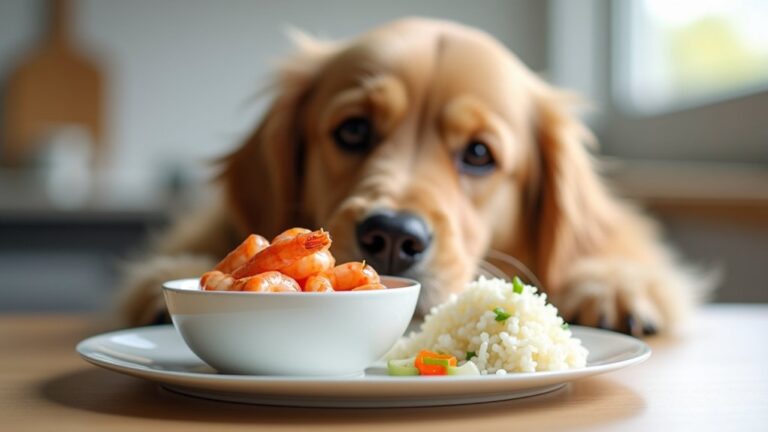



Yes — plain rice is safe for many dogs and can soothe an upset stomach. Cooked white rice is gentle on the gut and can help firm loose stool. Brown rice contains more fiber and nutrients but is harder to digest during acute digestive upset. Portion control matters: too much rice can unbalance nutrition and prolong issues. Always monitor your dog’s condition and consult a veterinarian for persistent symptoms.
What Makes Rice Safe for Dogs?
Rice is safe for dogs provided you serve it plain, fully cooked, and in the right amount. You help your dog most whenever you keep it simple, because added salt, butter, and spices can cause trouble. Cooked rice also offers good nutrient bioavailability, so your dog can use its carbs without much effort.
Still, you should pair it with a complete meal, since rice alone can’t meet every need. Should you choose white rice, you often get a gentler option with fewer arsenic concerns than some whole grains. Brown rice can still fit, but you’ll want to keep portions modest and cook it well. Whenever that’s the case, you give your dog a safe, familiar food that fits neatly into your care routine.
Why Rice Helps Dogs With Upset Stomachs?
Whenever your dog’s stomach feels off, plain rice can help because it gives them bland, easy-to-digest carbs that don’t ask too much from the gut.
It’s gentle on the stomach, so it often feels like a calm reset after vomiting or diarrhea.
Rice can also help firm loose stool, which is why it shows up so frequently in simple bland diets.
Bland, Easy-To-Digest Carbs
Most of the time, plain rice helps dogs with upset stomachs because it gives their gut a break. You’re offering a simple carb that’s easy to manage whenever your dog’s belly feels off.
White rice usually works best because it’s mild, and it can help you keep things steady while you choose low glycemic alternatives for later meals.
For now, consider rice as a calm helper, not a full fix. Pair it with portion control strategies so you don’t crowd out better nutrition. That balance lets you support your dog without stressing the system.
Should your dog seem sore, worried, or hungry, this gentle option can feel like a small win for both of you.
Gentle on the Stomach
Usually, plain rice helps settle a dog’s stomach because it acts like a calm, simple fuel your dog’s body can handle with less effort. Whenever your pup feels queasy, you can lean on its soft texture to make each bite feel less demanding.
That gentle feel often helps you keep meal pacing slow, which matters whenever you’re trying not to overwhelm an uneasy belly. You can serve small portions, then watch how your dog responds before offering more.
Because rice is bland and cooked well, it won’t add extra stress to an already sensitive system. So, whenever your dog needs something familiar and easy, rice can give you a steady bridge back to normal meals without making the moment harder for either of you.
Helps Firm Loose Stool
Plain rice can often help firm up loose stool because it adds a gentle source of starch that absorbs water and gives your dog’s digestive system a calmer job.
Whenever you feed plain, fully cooked rice, you give your pup a bland base that can slow things down a bit and make stools easier to shape.
That’s why it often shows up in short-term tummy care.
- It supports hydration support by pairing well with fresh water.
- It works best whenever you keep portions small.
- It can fit well with probiotic pairing for extra gut balance.
You can feel good offering this simple meal whenever your dog needs relief.
Just skip butter, salt, and spices, because your buddy’s belly doesn’t need a party.
White Rice vs. Brown Rice for Dogs
When you compare white rice and brown rice for your dog, white rice usually wins for easy digestion, especially provided your pup’s stomach feels shaky.
Brown rice gives you more fiber, which can help in a regular diet, but it might be a little harder on sensitive bellies. So, the best choice depends on whether you’re calming an upset stomach or simply adding a safe grain to your dog’s meals.
White Rice Digestibility
White rice is easier for dogs to digest than brown rice, and that’s why vets often reach for it initially whenever a pup’s stomach is upset.
You’ll usually notice its lower amylose content gives it a softer cooking texture, so your dog’s belly has less work to do.
Whenever you keep it plain and fully cooked, you give your dog a gentle meal that feels safe and familiar.
- It breaks down fast.
- It stays bland and mild.
- It pairs well with lean protein.
Brown Rice Fiber Content
Brown rice brings a little more to the bowl than white rice does, and that extra fiber can matter for your dog’s digestion.
You’ll notice it offers more roughage, which can help stool move with steadier rhythm. It also keeps more digestible carbohydrates in a slower, fuller form, so your dog gets energy without a sudden rush.
Because the grain stays more complete, it holds better mineral retention than white rice, too. That can feel reassuring when you want food that does a bit more than fill space.
Still, the added fiber can be a lot for some sensitive stomachs, so you’ll want to watch how your dog responds. Should your dog do well with it, brown rice can fit neatly into your shared mealtime routine.
Which Rice Suits Dogs
Picking the right rice for your dog can feel like a small choice, but it matters more than it seems. White rice usually suits upset tummies best because it’s soft, bland, and easy to digest.
Brown rice gives you more fiber and nutrients, so it can fit better in regular meals whenever your dog’s gut feels steady. Should you be shopping for other options, wild rice and sushi rice can work too, but only plain and fully cooked.
Choose based on how your dog feels:
- White rice for diarrhea or vomiting
- Brown rice for added fiber
- Plain rice only, no seasoning
You’re helping your dog feel safe, calm, and cared for whenever you pick the gentler bowl.
How Much Rice Can Dogs Eat?
Whenever you feed rice to your dog, the amount matters just as much as the type, and a little usually goes a long way.
Use portion control so rice stays a small side dish, not the main event. For many dogs, about one to three tablespoons of cooked rice per meal is enough, while larger dogs could handle a bit more.
Keep calorie budgeting in mind, since rice adds energy fast and can crowd out the protein your dog needs.
Should your dog have an upset stomach, start small and watch how they act after eating. You want your buddy to feel better, not stuffed.
In the event of doubt, ask your vet, especially in the event your dog has diabetes, is overweight, or needs a special diet.
How to Cook Rice for Dogs
Start with plain white rice, since it’s gentle and easy on your dog’s stomach.
Rinse the grains before cooking to help remove extra starch, then cook them fully in water without salt, butter, or spices.
Once it’s soft and fluffy, serve just a small portion so you can keep it simple and safe.
Choose Plain White Rice
Plain white rice is the safest choice whenever you want to make a simple bowl for your dog. Its plain texture and quick preparation make it easy whenever your pup needs gentle food and you want to help fast. You can cook it until soft, then mix it with a little lean protein for a calm meal that feels familiar and soothing.
- Keep it plain, with no salt or butter.
- Choose fully cooked grains that stay soft.
- Serve small portions that fit your dog’s size.
Whenever you stick with white rice, you give your dog a mild option that’s easy on the stomach and easy for you to trust. That little bit of calm can matter a lot whenever your buddy isn’t feeling their best.
Rinse Before Cooking
Before the rice hits the pot, give it a quick rinse under cool water so it cooks up cleaner and gentler for your dog. This rinse technique washes away extra surface starch, which can make the grains gummy. It also supports mineral reduction by removing some dust and leftover debris from processing.
You don’t need a long soak, just swirl the rice with your hand, drain it, and repeat until the water looks clearer. Whenever you do this, you help the rice stay light and easy to digest, which matters whenever your dog’s stomach feels off.
Keep the process simple, steady, and calm. That way, you’re making food that feels safe, familiar, and kind for your pup, one small kitchen step at a time.
Serve Small Portions
Keep the bowl small and steady while you serve rice to your dog, because a little goes a long way.
Start with portion control so you don’t overload an upset stomach. A few spoonfuls often give comfort without crowding out the rest of the meal. In case your dog is new to rice, use a gradual introduction and watch how the belly responds.
- Mix rice with plain protein.
- Keep each serving warm and soft.
- Offer more only where stools improve.
When you stay calm and measured, you help your dog feel safe at mealtime. That’s the goal, right? Small portions make it easier to spot changes, and they keep rice helpful instead of too much.
Best Foods to Mix With Rice
Whenever you mix rice with the right foods, you can turn a simple bland meal into something gentler and more complete for your dog.
Try lean proteins like chicken, turkey, or fish, because they add strength without making the bowl heavy. Then fold in cooked vegetables such as carrots, green beans, or pumpkin-safe peas for extra comfort and fiber. You can also add a spoon of cottage cheese provided your dog tolerates dairy, since it brings soft protein and a mild taste. Pumpkin puree works well too, especially for a calm, smooth texture.
Keep each mix plain and fully cooked, so your dog gets a meal that feels safe, familiar, and kind on a sensitive stomach.
When to Use Rice in a Bland Diet
Rice works best in a bland diet whenever your dog needs gentle food that won’t push an upset stomach too hard.
Use it whenever your dog has a brief stomach bug, loose stool, or after a vet says to rest the gut. Your timing guidelines should focus on the initial day or two of recovery duration, while simple meals can feel safer and easier to keep down. Then, pair small portions with plain cooked protein.
- Start after vomiting slows.
- Feed short term, not for weeks.
- Watch your dog’s comfort at each meal.
You’re helping your dog feel cared for, and that steady routine can make this rough patch feel a little less stressful.
Signs Rice Isn’t Agreeing With Your Dog
Sometimes a dog’s stomach gives you a clear warning that plain rice isn’t sitting well, and it’s smart to notice it promptly.
You might see loose stools, gas, or vomiting after meals. Your dog could also act uneasy, lick lips often, or leave the bowl untouched. These appetite changes matter because they can show that the rice is too much, too plain, or just not a fit for your dog right now.
Watch for a dull coat condition too, since poor digestion can affect how your dog looks and feels. Should signs keep showing up, stop the rice and talk with your vet. That way, you protect your dog’s comfort and keep your shared routine steady, calm, and caring.
Can Puppies Eat Rice Safely?
Yes, puppies can eat rice safely provided you serve it plain, fully cooked, and in small amounts, but their growing bodies need more than rice alone.
Consider it as a gentle side, not a full meal, especially during weaning nutrition and each portion shift.
Whenever your puppy’s tummy feels tender, a little rice can soothe without drama.
- Mix rice with puppy food, not as a meal swap.
- Keep servings tiny and plain.
- Watch for loose stool, gas, or less interest in food.
Because puppies need steady protein, fat, and minerals, rice should stay occasional and modest.
Should you be unsure, ask your vet so you and your pup can feel confident together.
Can Dogs Eat Rice Every Day?
Feeding your dog rice every day can be okay in some cases, but it shouldn’t take over the bowl. You can use it as a calm, easy side, especially in the event your dog’s stomach needs a break.
Still, your dog needs meal variety so the diet stays balanced and interesting. Rice gives energy, but it doesn’t cover every need on its own. That’s why portion control matters. A small scoop with a complete meal works better than a big pile of rice.
In the event you feed it daily, keep it plain and fully cooked, and watch how your dog looks, acts, and poops. Should you notice changes, slow down and adjust with care.
What Toppings or Add-Ins to Avoid
Even a plain bowl of rice can turn messy once you start piling on toppings, so this is where a little caution goes a long way.
Whenever you feed rice, keep it simple so your dog’s stomach stays calm and your bond stays easy.
Whenever skip onion avoidance every time, because even small bits can cause trouble.
Whenever watch for garlic toxicity, since garlic can irritate your dog and isn’t worth the risk.
Also pass on sugary toppings like syrup or sweet sauces; they add nothing helpful.
Dairy additions, such as butter, cheese, or cream, can upset many dogs and make the meal heavier than it should be.
- Plain rice keeps things gentle
- Simple meals are easier to trust
- Clean ingredients help your pup feel safe
When to Call Your Vet for Digestive Issues
Provided that your dog’s tummy trouble is mild, plain rice can help for a short time, but you should call your vet whenever the symptoms don’t improve or start to get worse.
Should your dog keep having diarrhea after a day, or shows prolonged vomiting, it’s time to check in. You should also watch for emergency warning signs like blood in stool, a swollen belly, weakness, fever, or trouble breathing.
These signs mean your dog needs fast care, not just a bland meal. Even though your dog seems okay for a moment, repeated stomach upset can drain energy and hide a bigger problem. As soon as you reach out promptly, you help your dog get back to feeling steady, safe, and part of the pack again.
Frequently Asked Questions
Can Dogs Eat Rice From Takeout Meals?
Only if you are sure it is plain. Takeout ingredients can hide onions, garlic, salt, or sauces that wreck food safety. Skip seasoned rice and share only fully cooked, unseasoned rice in moderation.
Is Rice Safe for Dogs With Food Allergies?
Yes, rice is usually safe to try, but if your dog has grain sensitivity it could still trigger symptoms. For food allergies, choose hypoallergenic options and consult your vet to protect your pup.
Can Diabetic Dogs Eat Rice?
Yes, diabetic dogs can eat rice, but you must keep portions very small and include them in the insulin management plan. Because rice is not a low glycemic grain, consult your veterinarian to keep your dog healthy.
Does Rice Help Dogs Gain Weight?
Yes, rice can help your dog gain weight because it adds calorie density and easy energy. You’ll want to serve it plain, cooked, and paired with protein, since rice alone won’t support balanced, healthy weight gain.
Can Dogs Eat Rice Cakes or Puffed Rice?
Yes, you can offer plain rice cakes or plain puffed rice in tiny amounts, but flavored puffed rice can turn a simple snack into a stomach trouble monster. You will keep your dog safe, comfy, and included.