

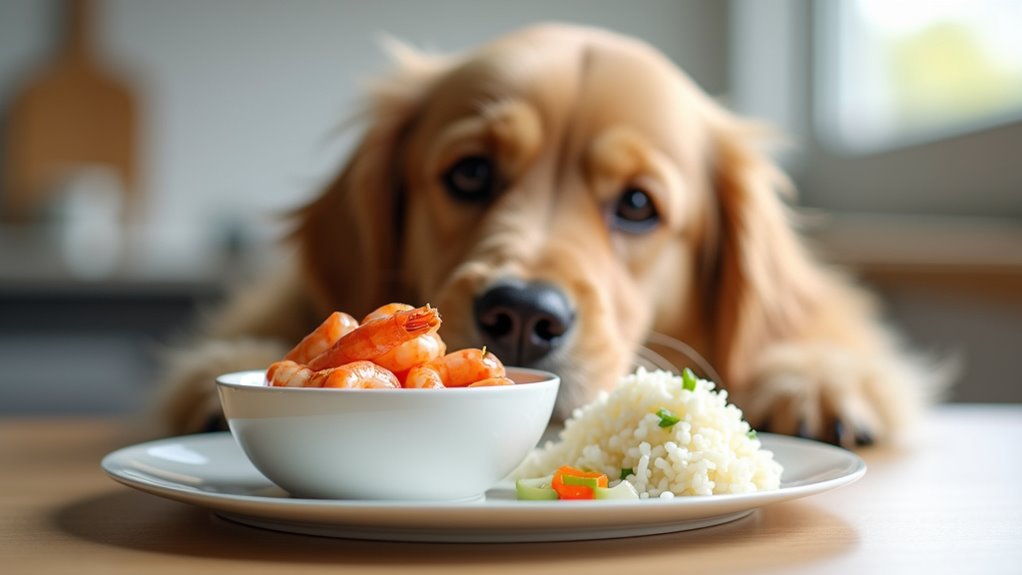

Yes, dogs can eat shrimp when it is plain and fully cooked. Shrimp provides lean protein, vitamin B12, niacin, phosphorus, and omega-3 fatty acids. Raw shrimp, shells, tails, butter, and seasoned preparations can harm digestion or cause choking and allergic reactions. Serving size should match the dog’s weight and health status, and shrimp should be an occasional treat rather than a regular meal. Consult a veterinarian about allergies or special dietary needs before offering shrimp to a dog.
Can Dogs Eat Shrimp Safely?
Yes, dogs can eat shrimp safely whenever you prepare it the right way, but only as an occasional treat.
You can feel good offering it whenever you choose careful shrimp sourcing and check seasonal availability, since fresh, plain shrimp lowers your worry.
Initially, cook it fully, then peel it, remove the tail and vein, and serve bite-sized pieces. This helps you keep things safe and simple for your dog’s bowl.
Also, skip seasoning, butter, oil, and breading, because those extras can upset your pup’s stomach.
Begin with a small piece and watch for itching, vomiting, or loose stool.
Should your dog have allergies or a sensitive tummy, consult your vet before you share any more.
What Are the Benefits of Shrimp for Dogs?
Shrimp can offer a few real benefits for dogs provided you serve it the right way, and that’s why several pet parents like it as a special treat. You give your dog Low calorie protein, which can help whenever you want a lighter snack that still feels rewarding. It also brings vitamin B12, niacin, phosphorus, and omega-3s, and those nutrients can add gentle support to your dog’s daily routine. Some shrimp even offers Antioxidant support, which could help your dog feel strong and steady.
| Benefit | Why it matters | How it feels |
|---|---|---|
| Low fat | Helps keep treats light | You feel good sharing |
| Protein | Supports muscles | Your dog stays satisfied |
| B vitamins | Aid energy use | Your pup feels lively |
| Omega-3s | Support skin and coat | Your bond glows |
| Small reward | Fits treat time | Your dog feels included |
Can Dogs Eat Raw Shrimp?
Even though shrimp can be a tasty, light treat for your dog, raw shrimp is a different story. You shouldn’t serve it raw, because raw risks include pathogen exposure from harmful bacteria and parasites. That exposure can upset your dog’s stomach and leave you both stressed.
Instead, choose shrimp that you’ve cooked fully and kept plain, so you stay on the safe side together. In case you’re tempted to share a bite, bear in mind that your dog counts on you to make the smart call.
Begin with a small, cooked piece only after it has cooled, and watch for any signs of discomfort. Should your dog have a sensitive belly or a health issue, consult your vet beforehand. Your pup deserves a treat that feels good and stays safe.
Can Dogs Eat Shrimp Shells and Tails?
You shouldn’t give your dog shrimp shells or tails, even though the shrimp itself is cooked and plain. Shells can get stuck in your dog’s throat or gut, and tails are tough to chew and hard to digest.
Should your dog snags one by accident, watch closely for gagging, vomiting, or belly pain, and call your vet in case anything seems off.
Shell Choking Risks
Although cooked shrimp can be a safe treat for dogs, the shell, tail, and vein change the scene fast. You need to skip shell hazards because sharp pieces can catch in the throat or mouth, and that can turn snack time into panic.
For choking prevention, peel every shrimp completely and cut it into bite-sized bits before you share it. Then, watch your dog closely the initial time, especially unless they gulp food. Should you notice coughing, pawing at the face, gagging, or trouble swallowing, stop right away.
Also, keep shrimp plain and fully cooked, so you’re not adding extra stress to a sensitive stomach. With a little care, you can make treat time feel safe, calm, and part of your shared routine.
Tail Digestibility Concerns
Shrimp tails can cause just as much trouble as shells, so it helps to treat them with the same caution. Whenever you consider tail digestibility, bear in mind that your dog’s stomach isn’t built to degrade sharp, tough pieces well.
That’s why tails can lead to intestinal irritation or even a blockage should your pup swallow them whole.
- Remove the tail before serving.
- Cut shrimp into tiny bites.
- Offer only plain, cooked shrimp.
- Watch for coughing, vomiting, or belly pain.
In case your dog grabbed a tail, stay calm and keep an eye on them. Many dogs pass small bits, but some don’t.
You’re doing the right thing through making shrimp safer for your buddy with simple prep and close care.
How Should You Prepare Shrimp for Dogs?
Before you give your dog shrimp, take off the shell and tail so you can lower the choking risk.
Then cook it fully and keep it plain, with no butter, salt, garlic, or spices.
A simple, soft piece of shrimp is safest whenever you intend to offer it as an occasional treat.
Remove Shell And Tail
A safe shrimp treat starts with the shell and tail coming off completely, because those hard parts can scratch your dog’s mouth, turn into a choking risk, or cause a stomach blockage. Whenever you peel shrimp, you also protect shrimp texture and improve presentation safety, so your dog gets a smoother bite that feels easy to trust.
- Twist off the tail initially.
- Peel away every shell piece.
- Check for sharp bits near the legs.
- Cut the shrimp into bite-sized pieces.
This small step helps you serve treats with confidence, and it lets your dog join the snack time fun without stress. In case the shrimp still feels rough or looks intact, keep working until it’s fully bare. That extra minute can make a big difference for your dog’s comfort and safety.
Cook Plain And Thoroughly
Cook the shrimp thoroughly and keep it plain, because that’s what makes it safest for your dog. You can steam gently, boil, or bake it until the flesh turns opaque and firm. Then let it cool, and don’t rush this step, because hot shrimp can burn your dog’s mouth.
Next, serve unseasoned shrimp with no garlic, onion, butter, oil, or spicy sauce. Those extras might upset your dog’s stomach and steal the simple goodness you want.
Since you’re joining your dog in a treat moment, make each piece bite-sized and easy to chew. In the event the shrimp still has any shell, tail, or vein, remove it before you offer it.
Whenever you keep it clean and plain, you help your dog enjoy a safe, tasty snack.
How Much Shrimp Can Dogs Eat?
Whenever you give shrimp to your dog, less is definitely more, because it should stay an occasional treat, not a meal. Keep your focus on portion control and calorie tracking so your pup still gets balanced food. Begin small, then watch how your dog handles it.
- Extra-small dogs: about 1/2 medium shrimp
- Small dogs: about 1 medium shrimp
- Medium dogs: about 2 medium shrimp
- Large dogs: about 3 medium shrimp
For most dogs, one or two pieces are enough for a happy snack. You’re building trust with every careful bite, and that feels good.
Should you want to give shrimp more than once in a while, ask your vet beforehand. That way, you can keep treat time safe, simple, and part of your shared routine.
Which Dogs Should Avoid Shrimp?
Some dogs should skip shrimp altogether, even though you’ve already kept the portions small and simple. In case your dog has seafood allergies, don’t tempt fate, because even a tiny bite can trigger itching, vomiting, or swelling.
You should also avoid shrimp for dogs with pancreatitis, stomach trouble, or a history of food sensitivity. Senior dogs might need extra caution too, since their digestion can be more fragile and a new treat can upset the whole day.
Should your dog take a special diet or has kidney or heart concerns, ask your vet beforehand. That quick check helps you protect your dog and stay in the safe, confident club of pet parents who know at what point to say no to a tempting treat.
What Are Easy Ways to Serve Shrimp to Dogs?
You can make shrimp simple and safe for your dog through keeping it plain and easy to chew. Start with fully cooked, peeled shrimp, then cut it into tiny bites so your pup can enjoy it without stress.
In case you want extra variety, try these easy options:
- Steam shrimp and serve a small piece by hand.
- Mix chopped shrimp into a Frozen purée for a cool treat.
- Stir shrimp into a little Herb infused broth, but only provided it’s dog-safe and plain.
- Use shrimp as a topper on regular kibble for a special moment.
Keep portions small, since your dog only needs a little. Avoid seasoning, butter, and shells.
Whenever you serve shrimp this way, you help your dog feel included, cared for, and happy at treat time.
Frequently Asked Questions
Can Puppies Have Shrimp Treats?
Yes, you can give puppies shrimp treats like tiny moonlit jewels, but only plain cooked peeled pieces. Start with small portions for texture training and keep them rare. Check with your vet first.
Is Shrimp Safe for Dogs With Pancreatitis?
Probably not. You should not give shrimp to a dog with pancreatitis, because even though it is low in fat content, any pancreatitis risk matters. Ask your vet first and choose safer, vet approved treats instead.
Can Dogs Be Allergic to Shrimp?
Yes, your dog can be allergic to shrimp. Watch for shellfish sensitivity, itching, vomiting, or swelling; wouldn’t you want to catch that sooner? An iodine reaction is possible too, so ask your vet before feeding shrimp.
How Often Can Dogs Eat Shrimp?
You should give shrimp only occasionally, not daily; keep it under 10% of your dog’s calories. Use tiny portion size, watch feeding frequency, and offer just one or two plain, cooked pieces as a treat.
Should Shrimp Be a Regular Dog Food Ingredient?
No, you should not make shrimp a regular ingredient in your dog’s food. Keep it occasional, considering seasonal availability and sourcing sustainability. You will support balanced nutrition, avoid excess cholesterol, and still share a tasty, safe treat.