

Dogs stretch for simple reasons: to wake up muscles, shake off stiffness, calm themselves, signal play, or respond to pain or tummy issues. Most stretches are normal body maintenance or a social cue. Some repetitive or painful-looking stretches point to discomfort and need attention. Watch for changes in frequency, posture, or added signs like whining or reluctance to move. This helps decide whether a vet visit is warranted or just a quick cuddle and gentle massage.
Why Does My Dog Keep Stretching?
Most of the time, your dog keeps stretching because it feels good and helps the body reset. You might notice behavioral stretching when your dog wakes, gets excited, or wants to shake off stiffness. This can be a normal habit, and it often fits age related flexibility too, since older dogs could need a gentler start.
Stretching can also show comfort, anticipation, or a quick way to release tension before moving on. Once you know your dog’s usual pattern, you can feel more at ease and spot changes faster. Should the stretch look sudden, repeated, or different from the norm, your dog might be trying to tell you something more crucial.
Normal Stretching After Sleep or Rest
Right after a nap or a long rest, your dog could stretch to wake the body up and get the muscles moving again.
This morning wakening can look like a slow bow, a long reach, or a big yawn that feels almost sleepy.
You’re seeing a normal muscle reset, which helps loosen stiff muscles and bring comfort after lying still.
Many dogs do this because it keeps them mobile and ready for the day.
It can also follow a quiet cuddle session or a lazy afternoon on the couch.
In most homes, this kind of stretching is simply part of healthy body maintenance.
Should your dog then walks off relaxed and bright, you can feel good appreciating it’s just a normal part of getting going.
Why Dogs Stretch Before Playtime
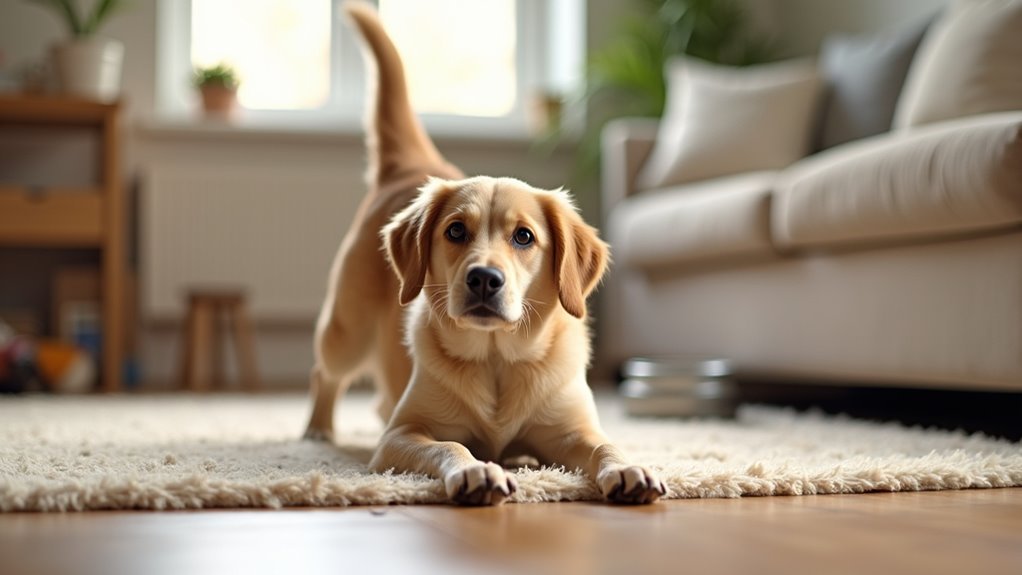
As your dog drops into a play bow, it’s often their way of saying, “Let’s go.” This stretch before playtime helps them gear up for action, and it can also serve as a friendly invitation to join in.
You might notice a loose body, bright eyes, and a wagging tail, all signs of energy buildup before the fun starts. In that moment, your dog isn’t just limbering up. They’re sending you a play invitation that says they’re ready to chase, wrestle, or bounce around the yard.
If you answer with a toy, a quick run, or a cheerful voice, you help turn that spark into shared joy. That simple back-and-forth can make your bond feel stronger, because your dog learns that playtime with you is safe, welcome, and exciting.
Stretching as a Sign of Stress
Whenever your dog stretches again and again, stress could be part of the reason. You might notice it during new routines, loud noises, or whenever the house feels tense.
Your dog could also show anxiety pacing, lick lips, or turn away. Those avoidance behaviors often mean your dog wants space and feels unsure. In those moments, stretching can help your dog release tension and cope with worry.
You can support your dog by keeping your voice calm, lowering the pressure, and giving a safe spot to relax. Gentle consistency helps your dog feel like part of the pack again.
Should the stretching keep happening, or should you see other stress signs, it’s smart to pay close attention and talk with your vet.
Dog Stretching and Digestive Discomfort
Should your dog keeps stretching and also seems uncomfortable, you could be seeing signs of digestive pain.
You could notice gas, a swollen belly, restlessness, or stretching that looks like it’s helping ease pressure for a moment.
Should those signs keep showing up, it’s worth paying close attention because bloating and other stomach problems can turn serious fast.
Digestive Pain Signs
Digestive pain can make your dog stretch in a way that feels a little too frequent or a little too intense. You might notice abdominal guarding, where your dog tenses the belly or avoids being touched. That’s your cue to pause and watch closely.
- They stretch, then curl up again fast.
- They look uneasy after meals or water.
- They seem quiet, tense, or less inclined to move.
Should you see this pattern, gentle feeding adjustments can help while you monitor your pup’s comfort. Small meals and a calmer routine could ease strain on the belly.
Still, you know your dog best, and sudden changes matter. Were the stretching to keep coming, or your dog act painful, call your vet so you can get support together and feel more at ease.
Gas And Bloating
That uneasy stretching you noticed can point to more than a sore belly, because gas and bloating often make a dog feel tight, crampy, and off balance. You might see him bow, pace, or keep changing positions as he tries to ease the pressure.
Common gas causes include gulping food, sudden diet changes, and swallowed air during fast drinking. Once the belly swells or feels firm, your dog could stretch to make room and find relief.
Some bloating remedies can help, like slowing meals, serving smaller portions, and checking for foods that upset his stomach. Should the stretching come with drooling, retching, a swollen abdomen, or obvious pain, you ought to call your vet right away, because bloating can turn serious quickly.
When Dog Stretching Means Pain
Should your dog keep stretching and seems stiff, sore, or reluctant to move, that can point to pain instead of a simple habit. Watch for signs like a tucked belly, whining, restlessness, or changes in how your dog walks, eats, or lies down.
In case the stretching looks sudden, happens a lot, or comes with vomiting, bloating, or obvious discomfort, call your vet right away.
Signs Of Discomfort
Upon stretching starting to look frequent, stiff, or a little strained, it can be your dog’s way of saying something hurts. You know your dog best, so trust that uneasy feeling whenever the movement seems off. Watch the body posture and facial tension closely. A sore dog might stretch low, pause, or seem guarded afterward.
- The stretch looks slow, tight, or uneven.
- Your dog shifts weight, licks lips, or tenses up.
- The movement keeps repeating instead of easing.
These small clues often sit beside discomfort, not just habit. Still, you don’t need to panic. You can stay calm, stay observant, and give your dog the same steady care you’d want for a friend. Once stretching stops looking playful and starts looking strained, your dog could be asking for relief.
When To Call Vet
Whenever your dog’s stretching starts looking painful instead of normal, a call to the vet can bring you real peace of mind. Trust your gut should the stretch happens often, looks stiff, or comes with whining, panting, or a tucked belly. Those signs can cross your behavioral thresholds and point to pain, not play.
You should also call fast provided your dog vomits, has diarrhea, bloats, or stops eating. Seasonal allergies can add itchiness and restlessness, but they usually don’t cause deep abdominal distress.
In case the stretching follows an injury, low energy, or sudden mood shifts, your vet should check for joint trouble, muscle strain, or stomach pain. You’re not overreacting by asking for help. You’re protecting your dog, and that’s what good care looks like.
Medical Causes of Dog Stretching
Medical causes are worth considering about whenever your dog keeps stretching more than usual, because stretching can be their way of coping with pain, stiffness, or pressure inside the body. You’re not overreacting should you notice it often.
- Joint pain or muscle strain can make your dog stretch to ease soreness.
- Digestive trouble, like gas or pancreatitis, could cause repeated stretching as the belly feels tight.
- Neurological causes and endocrine disorders can also change posture, comfort, and movement.
In case you’re seeing this pattern, look at what else your dog is doing. A tucked belly, slow walking, or less energy often point to discomfort.
You know your dog’s habits best, so trust that inner sense whenever something feels off. Reaching out for help can bring relief and keep your pup feeling safe.
When Stretching Isn’t Normal
Should your dog keeps stretching and it looks tense, stiff, or painful, that’s not something to brush off.
You should watch for signs like whining, a hard belly, vomiting, diarrhea, or trouble moving, because those can point to real discomfort.
Whenever stretching seems sudden, frequent, or comes with other odd symptoms, it’s time to treat it as a warning sign and call your vet.
Pain or Discomfort Signs
Whenever stretching starts to look frequent or odd, it can be a sign that your dog isn’t just being playful, but is trying to cope with pain or discomfort.
You might notice facial grimacing, limb favoring, or a body that stays tense instead of loose. That can occur whenever sore joints, a pulled muscle, or tummy pressure makes movement feel hard.
In your pack, you want to spot these clues promptly so your dog gets support fast.
- Repeated stretching after short walks
- Stretching with a stiff rise or lie-down
- Stretching plus whining, licking, or hiding
If this pattern keeps showing up, trust your gut and watch closely. Your dog’s body could be asking for care, not another game.
Emergency Warning Symptoms
Sometimes stretching is more than a cute little bow, and that’s at which point you need to pay close attention.
Should your dog’s stretching comes with rapid breathing, sudden collapse, vomiting, a swollen belly, or clear pain, treat it as an emergency. You might also notice whining, pacing, drooling, trouble standing, or a tense body that won’t relax.
These signs can point to bloat, severe stomach trouble, injury, or another serious problem. Don’t wait to see whether it passes. Keep your dog calm, avoid food or water, and call your vet or an emergency clinic right away.
Upon spotting these changes promptly, you give your dog the best chance to get help fast and feel safe again.
What You Can Do at Home First
Once your dog keeps stretching, start with a calm, close look at the pattern at home, because a lot of stretching is just normal body care or a quick way to show excitement.
Next, watch what happens before and after each stretch, so you can spot habits that fit your dog’s day.
Then try:
- Add environmental enhancement, like chew toys, scent games, or short training breaks.
- Make temperature adjustments, such as a cozy bed or cooler room, provided your dog seems stiff or restless.
- Track sleep, play, and meals for a few days to notice clear triggers.
You’re not overreacting when paying attention.
Small changes often help your dog feel more settled, and that can make your home feel easier for both of you.
When to Call Your Veterinarian
Call your veterinarian should your dog’s stretching starts to look unusual, because a new pattern can point to more than simple stiffness or excitement.
In case your dog stretches over and over, seems painful, or won’t settle, you’ll want help soon. Also call in the event you see vomiting, diarrhea, a swollen belly, panting, weakness, or a sudden change in behavior. Those behavioral cues can signal stomach trouble, injury, or joint pain that needs care.
Even should your dog still eats, repeated stretching with poor energy or tucked posture deserves attention. Trust your gut here; you know your dog’s normal rhythm best.
Quick advice can bring peace of mind and support preventative care, which helps your dog stay comfortable and part of the pack.
Frequently Asked Questions
Can Certain Dog Breeds Stretch More Often Than Others?
Yes, breed differences and activity levels can make you notice stretching more in some dogs, especially flexible, energetic, or athletic breeds. You will still want to watch for pain or unusual changes.
Does Age Affect How Much Dogs Stretch?
Yes, age can change how much you notice it. Older dogs often show more age differences because joint stiffness makes them stretch more. You will feel less alone whenever you spot this normal, comforting habit.
Is Stretching Normal in Puppies?
Yes, stretching is normal in puppies. You will often see puppy reflexes when they shift in sleep. Your pup loosens stiff muscles, resets after rest, and gets ready for play. If it is excessive, ask your vet.
Can Weather Changes Make Dogs Stretch More?
Yes, weather changes can make your dog stretch more. Temperature triggers and seasonal discomfort might stiffen muscles or joints, so your dog stretches to loosen up, feel comfortable, and get ready for movement.
Should I Record My Dog Stretching for the Vet?
Yes, record your dog’s stretching whether it is frequent or unusual. You’ll give your vet consultation helpful clues by tracking behavior, timing, and any pain, vomiting, or stiffness, so you can feel more prepared together.