

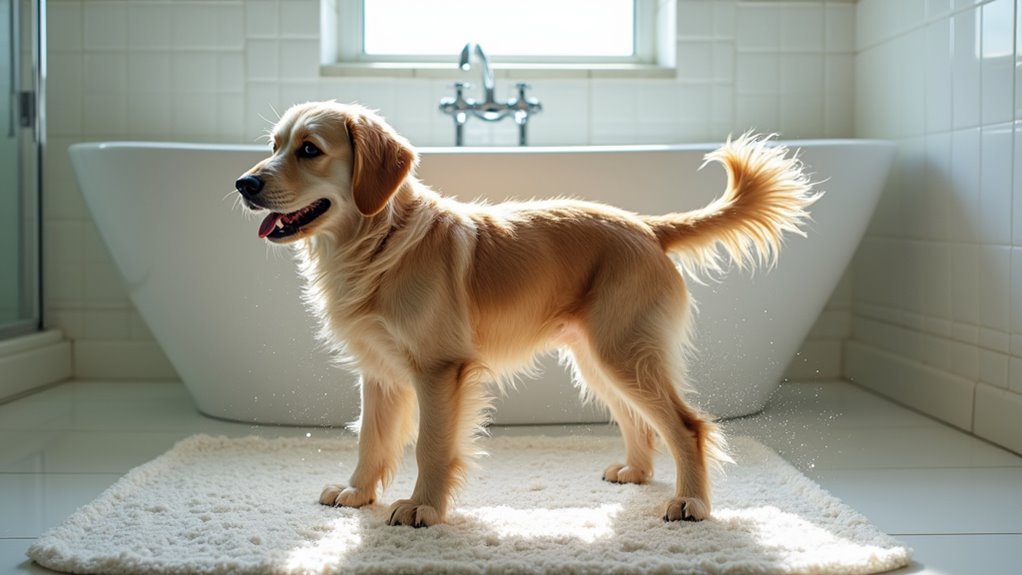

Dogs shake after a bath because their bodies are trying to shed water from fur, skin, and ears. That shaking is a natural, efficient drying mechanism that reduces weight and restores comfort. Cold air, stress from bathing, or strong shampoo can increase how vigorously a dog shakes. Thick coats and floppy ears trap more moisture, so those dogs tend to shake harder and longer. Observing the pattern and triggers of shaking can help pick gentler grooming methods and prevent irritation.
Why Is My Dog Shaking After a Bath?
Whenever your dog starts shaking after a bath, it’s usually just their body doing what it was built to do. You’re seeing a quick, hardwired shake that flings water off the coat and helps your dog feel normal again.
In some dogs, a little post bath cortisol can rise because the bath felt stressful, so the shake also acts like a reset. You may notice grooming displacement too, whenever your dog shakes, licks, or fusses after being handled.
Thick fur can make this more obvious, but the behavior itself is common and safe. Should your dog settle soon after, you’re likely watching a healthy reflex, not a problem.
Water Left on the Coat and Skin
Once your dog steps out of the bath, surface water can drip from the coat and skin right away.
In case your dog has a thick undercoat, that damp layer can hold moisture longer and make shaking feel stronger.
In many cases, your dog shakes because the body starts a quick drying reflex to move that water off fast.
Surface Water Drips
A big reason your dog shakes after a bath is simple: water is still sitting on the coat and skin. As those tiny drops spread, surface tension keeps them clinging to hair, and droplet formation makes them gather in little beads.
Your dog feels that wet layer right away, so a quick shake helps fling it off fast. You’ll often see the whole body twist and snap because that motion clears the surface better than standing still. It’s a normal, practical response, and it can look funny even whenever your pup seems a little dramatic.
Provided your dog shakes once or twice after towel-drying, that usually just means the coat still has water on it and wants one more round of drying.
Damp Undercoat Holds
Sometimes the water doesn’t stop at the surface. It can settle in your dog’s dense undercoat, where coat insulation and moisture trapping work against a quick dry. That concealed dampness can make your dog feel chilled and uneasy, so shaking helps air move through the fur.
| What you notice | Why it happens |
|---|---|
| Deep fur stays wet | Water sits near the skin |
| Shaking starts fast | Your dog is seeking relief |
| Thick coats seem worse | More layers hold water |
| Damp skin feels cool | Comfort drops quickly |
When you rub with a towel, you can help lift that trapped moisture. Still, your dog’s body might keep shaking a bit while the undercoat dries. That reaction is common, and it often means your pup simply wants to feel cozy again.
Slow Drying Reflex
Water left on the coat and skin can keep your dog shaking long after the bath ends. When moisture clings to the fur, your dog keeps trying to move it off in quick bursts. That reflex works better where coat airflow is good, because moving air helps water evaporate faster.
Should your room have high ambient humidity, though, drying slows down and the shaking could last longer. Thick coats, belly fur, and skin folds can hold tiny pockets of water, so your dog might feel damp even when you believe the bath is over.
You can help through towel blotting, brushing gently, and giving your pup a warm, draft-free spot. That extra comfort helps your buddy relax sooner.
Bath-Time Stress and Nervousness
Provided that your dog shakes after a bath, stress perhaps is part of the reason, especially in case you notice wide eyes, tucked ears, panting, or a worried posture.
Loud water, a slippery tub, strange smells, and rough handling can all make your dog nervous and trigger that jittery response. You can help through keeping the routine calm, using warm water, moving slowly, and giving gentle praise so bath time feels safer.
Bath Anxiety Signs
A bath can leave some dogs looking calm on the outside while their body still tells a different story, and that’s where bath anxiety signs start to show.
You might notice grooming avoidance before bath time, then post bath pacing once the water stops. Your dog could lick lips, tuck the tail, or keep eyes wide as though asking for backup.
These small cues matter because stress can linger after the towel comes out.
- You might see trembling that doesn’t fade fast.
- Your dog could stay close and seek comfort.
- Rapid movement can follow, like post bath pacing.
- Refusing brushes or the tub can signal worry.
When you spot these signs, you’re not alone.
Your calm voice and steady routine can help your dog feel safer and more at home.
Triggers Of Nervousness
Sometimes the nervousness you see after a bath starts before the towel even comes out, and it often comes from a mix of fear, discomfort, and plain old sensory overload. You might notice your dog stiffen once the tub appears, the water runs, or you touch sensitive spots. Loud sounds, slippery surfaces, and being held still can all raise stress fast.
Should your owner conditioning have linked bath time with awkward handling, your dog could shake as soon as the routine begins. Social cues matter too, because your calm or tense mood can tell your dog something feels off. That extra worry can spill into trembling after the bath.
Even a short wash can leave your dog feeling keyed up, so the shaking looks like nervous energy finding a way out.
Comforting Bath Routine
Creating a calm bath routine can make a big difference for a nervous dog, because steady habits help your dog feel safer from the outset. You can keep the room warm, speak softly, and move at a slow pace so your dog knows what’s coming.
Then, use soothing routines like a gentle rinse, a favorite towel, and a short pause for treats.
- Let your dog sniff the tub initially.
- Use lukewarm water, not a shockingly cold spray.
- Keep your hands steady and your voice kind.
- Offer post bath bonding with brushing or quiet cuddles.
When you stay predictable, your dog learns that bath time won’t last forever, and that you’re right there with them. That trust can ease shaking and turn a stressful task into shared comfort.
Chills From a Wet Coat
As your dog emerges from the bath and starts to shake, part of that rush of movement is often the body’s way of coping with a damp coat. Whenever fur stays soaked, ambient humidity can slow drying and leave your dog feeling chilled.
You might notice more shaking in a cool room, since the wet coat pulls heat away and can drop comfort fast. A dog with a lower metabolic rate could warm up more slowly, so the shivers can last a bit longer.
You can help through toweling off the coat, using a warm room, and giving your dog a calm place to rest. That little burst of shaking usually means your dog’s trying to feel cozy again, not that anything’s wrong.
Instinctive Shake-Off Behavior
That damp, chilly feeling is only part of the story, because your dog’s full-body shake is also a built-in cleanup move. You’re seeing evolutionary roots in action, and it’s normal. After a bath, your dog’s body snaps into a quick rhythm that flings water off the coat and skin. That reflex saves time and helps your pup feel like themselves again.
- It starts the moment water hits the fur.
- It works fast on thick coats.
- It can look dramatic, but it’s natural.
- It might even serve social signaling, like saying, “I’m fine.”
When you stay calm, you help your dog settle faster. Your steady presence tells them this wet moment won’t last, and they belong right there with you.
Water in the Ears
Should your dog shakes after a bath, water could be trapped in the ear canal and feel annoying or even itchy.
You may notice your dog shaking its head again and again as it tries to fling that moisture out.
This is often just a quick fix, but should the shaking keeps going, it’s worth paying closer attention.
Ear Canal Moisture
Sometimes the simplest reason explains the whole puddle of drama: water can get trapped in your dog’s ear canal after a bath, and that damp, swishy feeling can make them shake their head hard.
You might help with gentle ear hygiene and smart moisture management, because a little care goes a long way.
- Dry the outer ear softly with a towel.
- Keep water out of the ear opening during rinsing.
- Check for lingering dampness in floppy ears.
- Watch for odor, redness, or irritation.
When moisture lingers, it can make the ear feel itchy or heavy, so your dog could keep shaking to find comfort.
Should you notice repeated head shaking after the bath, you’re not alone, and it’s worth paying attention.
A calm, careful routine helps your dog feel safer and more at ease.
Shaking to Dislodge Water
As soon as your dog shakes right after a bath, it’s often just their body trying to fling water out of the ears and off the coat as fast as possible.
You can regard it as coat centrifugation, with droplet aerodynamics helping those tiny beads fly free. That quick twist of the head also helps clear trapped water from the ear canal, which can feel weird and itchy. Should you’ve ever felt water stuck in your own ear, you know the urge.
Your dog isn’t being dramatic; they’re simply trying to get comfy again. A few strong shakes are normal, especially with floppy ears or thick fur. Were the shaking keeps going, though, you’ll want to check for irritation, redness, or pain.
Shampoo or Soap Irritation
- Rinse with care so no residue stays behind.
- Check for redness on the belly, ears, and paws.
- Use a gentle, dog-safe cleanser next time.
- Talk with your vet should the shaking keeps going.
When you choose a softer product, you help your dog feel safer, calmer, and more comfortable after bath time.
Which Dogs Shake More After Baths
Dogs with thick coats, floppy ears, or a little extra bath-time anxiety often shake the most after a wash, and that’s usually nothing to worry about.
Should your dog has heavy fur, coat thickness makes it harder for water to slip off, so the shake feels bigger and lasts longer. Breed genetics also matter, since some dogs were built to hold more fur, more skin folds, or more ear coverage. You might notice this in retrievers, spaniels, shepherds, and other fluffy friends.
Smaller dogs can shake hard too, especially that they feel chilly or unsure. So provided your pup gives a dramatic wiggle, you’re seeing a normal dog move, not a personal insult. That quick shake helps your dog get comfortable again, and you’re not alone in noticing it.
When Bath Shaking Is a Problem
At the point bath shaking goes beyond a quick post-wash wiggle, it’s worth paying attention. You know your dog’s normal behavior, so watch for behavioral thresholds that feel off. A little shake is fine, but nonstop trembling, stiff posture, or clear distress can point to medical causes instead of simple drying.
- Shaking that lasts several minutes
- Head tilt, ear scratching, or whimpering
- Redness, odor, or discharge
- Trouble walking, fever, or weakness
If you see these signs, your dog might need help, not just reassurance. You’re not overreacting through noticing the difference. Bath time can be awkward, sure, but your dog shouldn’t seem miserable afterward.
Whenever the shaking feels intense, repeated, or paired with other symptoms, it’s time to consider beyond the bath and take that concern seriously.
How to Help Your Dog Dry Off Faster
Towel drying can make a big difference right after bath time, especially as your dog starts shaking before you’ve even reached for the dryer.
Start with microfiber towels, since they soak up water fast without rough rubbing. Press the towel into the coat, then lift and switch to a dry spot as it gets damp. Should your dog tolerates it, gently pat the chest, legs, belly, and ears, where water hides.
Next, keep the room warm and skip cold drafts, because chill can keep the shakes going. You might also use a low-noise dryer on a cool setting, but remain a safe distance away.
For extra comfort, try heated drying pads and let your dog rest on them while you brush out loose moisture.
Frequently Asked Questions
Can a Bath Make My Dog Shake From Anxiety?
Yes, your dog can shake from anxiety after a bath, especially if grooming fear or bathing trauma lingers. You are not alone; that trembling can be a storm of stress, not just water falling away.
Why Does My Dog Shake Even When Barely Wet?
Your dog can shake even though barely wet because temperature regulation and oil redistribution still trigger that hardwired drying reflex. You will often see it after a splash and it is totally normal among dogs.
Do Some Dog Breeds Shake More After Baths?
Yes, some breeds do. You’ll notice more shaking in dogs with thick coat type, long fur, or larger body size, since they hold more water. That does not mean anything is wrong; they are just drying off.
How Can I Tell if Water Is Stuck in My Dog’s Ears?
Look for lingering moisture inside the ear flap, an unusual odor, or a persistent head tilt. If the ear feels damp, smells bad, or your dog shakes its head frequently, water may be trapped there.
When Should Shaking After a Bath Worry Me?
Worry whenever you notice persistent shaking, pain, head tilt, odor, discharge, or balance issues. If behavior changes last longer than a short drying spell, seek veterinary help promptly so your dog feels safe and comfortable.
