

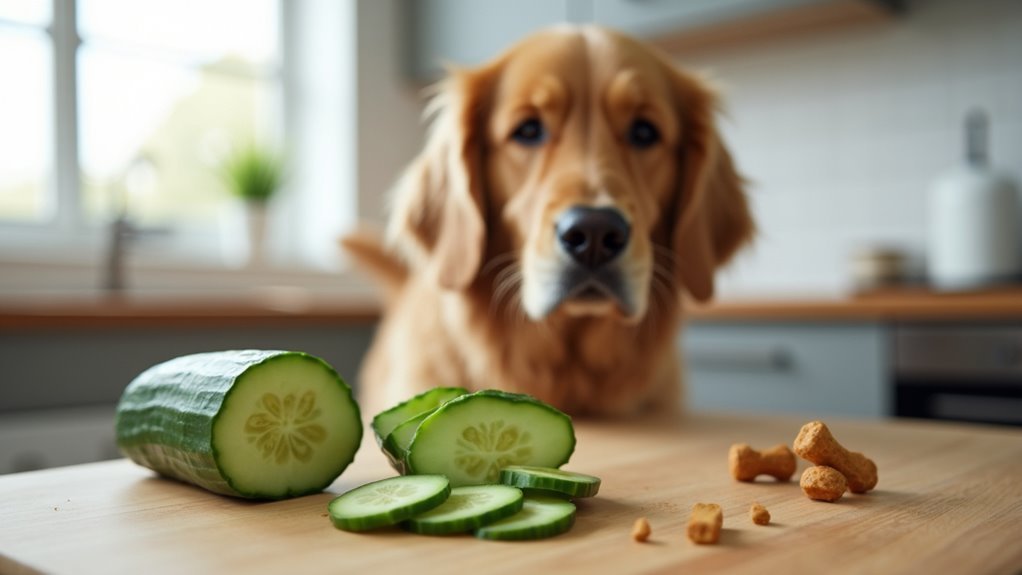

Yes — plain cucumber is safe for most dogs to eat. Cucumbers offer low calories and high water content, making them a hydrating, crunchy snack. Serve cucumbers peeled and sliced to reduce choking risk and avoid pickles or dressings with salt, garlic, or onion. Small dogs need smaller pieces; monitor any digestive upset after the first taste. Check with a veterinarian about specific health conditions like pancreatitis or salt-sensitive issues before adding new treats.
Are Cucumbers Safe for Dogs?
Yes, cucumbers are generally safe for dogs, and many vets and pet-care sources describe them as non-toxic.
You can offer plain, washed slices to your pup, and that keeps the snack simple and kind to their fur digestive system.
Start with a small piece, especially provided your dog has a sensitive stomach or skin allergies, so you can watch for any reaction.
Keep it raw, fresh, and free from salt, spices, or pickling.
Also, cut cucumbers into small pieces to lower choking risk, because your dog shouldn’t have to wrestle a veggie.
Serve them only as an occasional treat, not a meal.
Whenever you stay careful, you help your dog feel included, safe, and happily part of snack time.
Health Benefits of Cucumbers for Dogs
Cucumbers do more than just stay safe in your dog’s bowl. You can use them to give your pup a crisp snack that feels special without adding much extra weight.
Because they’re light and watery, they can help your dog feel refreshed after playtime or a warm walk. Their natural compounds might offer antioxidant support, which helps protect cells from everyday stress.
You might also like that cucumbers can fit into a plan for joint health, especially for dogs who need gentle, low-calorie treats. Whenever you share small slices, you’re not just handing over a snack, you’re giving your dog a simple way to enjoy something cool and clean.
That little crunch can make treat time feel like you’re both part of the same happy routine.
Cucumber Nutrition for Dogs
Whenever you look at cucumber nutrition for your dog, you’ll find a simple mix of water, fiber, and a few helpful vitamins and minerals.
That means cucumber can give your dog a light, invigorating snack without loading on extra calories.
Nutrient Profile Basics
A cucumber can be a light, simple snack for your dog, and its nutrition profile helps explain why. You’ll find that it’s mostly water, so it adds volume without many calories. It also carries fiber, a little vitamin C, vitamin B1, and potassium. That mix can fit nicely when you desire a treat that feels wholesome and friendly to your dog’s routine.
Still, cucumber isn’t a big nutrient powerhouse. You shouldn’t expect it to replace a balanced diet. Whenever you share it, regard it as a small bonus, not the main event. In case you offer the skin or seeds, their seed impact is usually minor, and vitamin absorption stays limited because the snack is so simple. That’s why plain cucumber works best.
Hydration Benefits
Often, a few crisp cucumber slices can do more than just satisfy a crunchy craving, because they also give your dog a gentle uplift of hydration.
Whenever you share them in warm weather, you support summer hydration in a simple, friendly way that feels like care, not fuss.
Since cucumbers are mostly water, they help add fluid to your dog’s day, especially after play or a walk.
That extra moisture can also support electrolyte balance, which matters whenever your pup has been active or out in the heat.
You still want to keep portions small and serve plain, washed pieces.
Then your dog gets a cool, fresh snack that fits right into your routine and helps them feel looked after.
Low-Calorie Treats
Cucumbers can be a smart low-calorie treat for your dog, especially whenever you want to reward good behavior without piling on extra calories. You can feel good being aware they fit into many weight-conscious routines.
Their crisp bite and high water content make them feel satisfying, yet they stay light on your dog’s diet. With portion control, you keep treats helpful instead of too rich. That matters whenever you employ cucumber for training rewards, because small pieces let you praise often without overdoing it.
Try a few plain slices, then watch how your dog responds. In the event your pup enjoys them, keep servings modest and steady. This way, you stay in control, and your dog still gets a fresh snack that feels special and safe.
How to Give Dogs Cucumbers Safely
You should always start with tiny cucumber pieces so your dog can chew them safely.
Small slices lower the choking risk and make it easier for you to see how your dog handles the new snack.
Should your dog do well, you may keep cucumber as a light, occasional treat.
Slice Into Small Pieces
Start via slicing cucumber into small, bite-sized pieces so your dog can eat it safely and comfortably. Good cutting techniques make each piece easy to chew, and they also support choking prevention, especially for tiny mouths or keen gulpers.
Provided you want extra peace of mind, trim the edges and keep the slices thin and even. You can also peel the cucumber initially should the skin feel tough.
After that, check the pieces again before serving, because a quick look helps you catch any chunks that seem too large. Whenever you keep the size small, you make snack time calmer and friendlier for both of you.
That simple step helps your dog enjoy a crisp treat without turning the moment into a frantic crunch fest.
Start With Tiny Amounts
After you’ve cut the cucumber into small pieces, the next step is to offer just a tiny taste initially. This beginner timer tip helps you see how your dog reacts without risking a tummy upset. A gradual introduction gives you room to notice any gas, loose stool, or surprise dislike, and that matters whenever you’re trying to keep snack time easy for both of you.
Start with one or two small bites, then wait and watch. Should your dog stays comfortable, you can slowly offer a little more next time. Keep the pieces plain, and serve them as an occasional treat, not a meal. Through moving at your dog’s pace, you make cucumber feel safe, familiar, and part of your shared routine.
How Much Cucumber Can Dogs Eat?
How much cucumber your dog can eat depends mostly on their size, health, and how well they handle new foods. You can keep it simple and still feel confident with clear portion guidelines.
- For tiny dogs, start with 1 to 2 slices.
- For medium dogs, 4 to 5 slices usually fits.
- For bigger dogs, a small handful works better.
- Keep cucumber as an occasional treat, not a meal.
Because seasonal availability can make cucumbers easier to find, you might reach for them often, but moderation still matters. Aim for treats to stay near 10% of daily calories. Cut the cucumber into small pieces, and offer plain, washed slices only.
That way, you help your dog enjoy a fresh snack while staying part of the pack.
When Cucumbers Upset a Dog’s Stomach
Even a food that’s safe in small amounts can upset your dog’s stomach should you give too much, too fast, or in the wrong form.
Should your dog gulp cucumber chunks, the sudden fiber load can outpace a digestive enzyme and leave you with gas, loose stool, or mild vomiting.
You may also see trouble should the cucumber wasn’t washed well, since bacterial contamination can irritate the gut and make your pup feel off.
Keep plain pieces small and serve them slowly, so your dog can adjust without drama.
Suppose your dog already has a sensitive belly, start with a tiny bite and watch for discomfort.
Upon noticing repeated vomiting, diarrhea, or pain, call your vet right away for guidance and reassurance.
Other Dog-Safe Veggies to Offer
Provided you want to mix up your dog’s snack routine, many other veggies can fit nicely alongside cucumber. You can build a small veggie mix that feels fresh and safe.
- Steamed greenbeans give your dog crunch without much extra fat, so they work well for everyday treat swaps.
- Roasted carrots taste sweet and soft, and they’re easy for many dogs to chew if served plain.
- Plain zucchini can add moisture and a gentle bite, which makes snack time feel a little more fun.
- Small broccoli florets can work too, but you should offer them sparingly because some dogs get gassy.
Try one veggie at a time so you can see what your dog enjoys. In that manner, you both stay relaxed, and your snack routine still feels like part of the pack.
Frequently Asked Questions
Can Dogs Eat Cucumber Skin Safely?
Yes, you can usually let your dog eat cucumber skin safely provided you wash it well and cut it small. The skin adds fiber and digestive benefits, but watch for pesticide residue and choking.
Are Cucumber Seeds Okay for Dogs?
Yes, cucumber seeds are generally fine for your dog; they are not known for seed toxicity and can even act as a mild digestion aid. Still, you should offer only small plain pieces to avoid upset.
Can Puppies Have Cucumbers as Treats?
Yes, you can give puppies cucumbers as treats in small plain slices. Start slowly to check puppy digestion and use them as occasional training treats. Keep pieces tiny washed and free of salt or seasonings.
Is Frozen Cucumber Safe for Dogs?
Yes, frozen cucumber is usually safe for your dog if you offer small pieces. You will avoid choking and temperature risks because your pup is not auditioning for a dental drama. Keep it plain and do not overdo it.
Can Cucumbers Help Dogs Stay Hydrated?
Yes, cucumbers can help your dog stay hydrated because they are about 90% water. You will also get mild hydration benefits and some support for electrolyte balance, but they cannot replace fresh water or a balanced diet.