

Dogs can still smell after a bath because odor sources go deeper than surface dirt. Trapped damp undercoat and skin folds hold bacteria and yeast that produce sour smells. Ear infections and dental issues create persistent, localized odors. Anal gland problems and skin conditions also cause strong, lingering scents. Proper drying, targeted cleaning, and veterinary attention usually stop the stink.
Common Reasons Dogs Still Smell After Bathing
Provided your dog still smells after a bath, you’re not alone, and it doesn’t always mean the bath went wrong. Sometimes natural skin oils, thick coats, or quick dirt pickup bring the odor back fast. Good coat maintenance helps, but your dog might need more than soap should the smell return soon after drying. You can also look at grooming frequency, since some dogs need brushing and washing on a steadier schedule to stay fresh.
Next, consider where the smell lingers. Wet fur can wake up trapped odors, especially in dense coats. Should your dog spend time outside, mud and damp air can cling again. Also, ears, paws, and skin folds may hold scent longer than the rest of the body. So, you’re not failing your dog. You’re just learning what their coat asks for.
Skin Infections That Cause a Persistent Odor
| Sign | What it can look like |
|---|---|
| Smell | Musty or foul |
| Skin | Red or flaky |
| Coat | Oily or dull |
| Behavior | Scratching often |
| Risk | Moist skin stays wet |
Because these infections feed on damp, irritated skin, drying well matters. A vet can treat the cause, and that helps your dog feel comfortable again.
Ear, Anal Gland, and Dental Smells
Sometimes the smell after a bath isn’t coming from your dog’s coat at all, and you might notice it near the ears, mouth, or rear.
Ear infections can leave a sour, yeasty odor, while anal gland problems often create a strong fishy smell that lingers.
In case the stink keeps coming back, those spots are worth checking next.
Ear Infections
Ever notice that your dog still smells after a bath, even though the fur looks clean? Ear infections can hide that stubborn odor. You might see ear debris, a waxy brown gunk, or notice your dog shaking its head after grooming.
Because canal anatomy traps moisture and limits airflow, yeast and bacteria can grow fast in floppy or folded ears. That smell can seem sour, musty, or just plain nasty.
Should your dog scratch at one ear, flinch when you touch it, or keeps tilting his head, pay attention. A bath won’t reach deep into the ear canal, so the odor lingers.
Upon spotting redness, swelling, or pain, your dog needs a vet check soon. You and your pup deserve relief, not that ear funk.
Anal Gland Issues
Anal gland odor can sneak up on you, and it often smells much worse than a clean bath should allow. You could notice a sharp fishy stink after grooming, and that usually points to your dog’s anal saccules. Whenever these little sacs fill, leak, or get infected, the smell sticks around because the bath can’t reach the problem.
Your dog might scoot, lick the rear, or seem restless, and that can make you feel worried. In some dogs, gland atrophy can also change how the sacs empty, so the odor keeps coming back. Should the smell return fast, ask your vet or groomer to check the area. They can help you and your dog feel comfortable again, and you won’t have to guess alone.
Why a Damp Coat Can Cause Odor
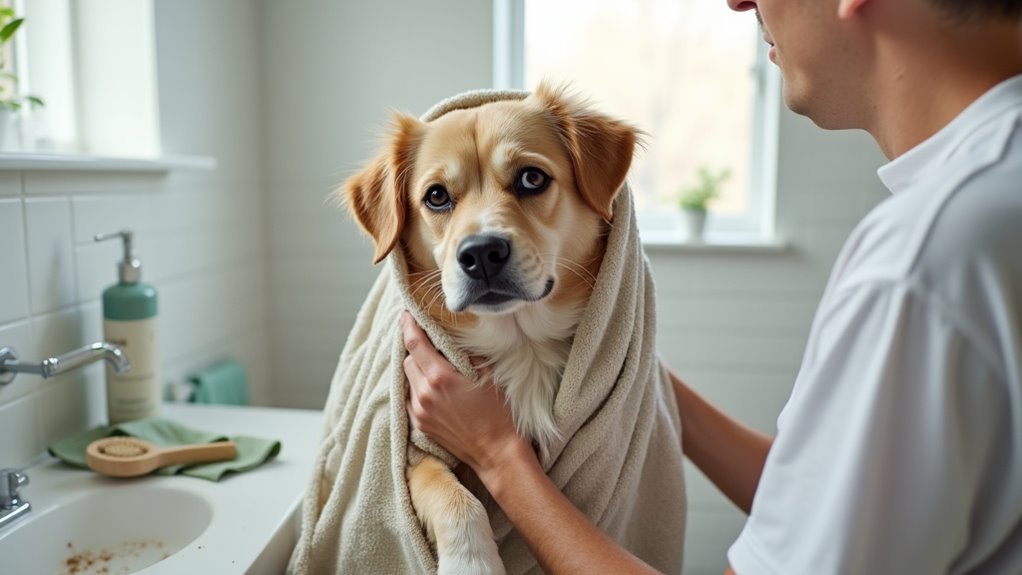
Whenever your dog remains damp after a bath, that wet coat can trap odor instead of washing it away.
In wet matter chemistry, water loosens skin oils and lifts concealed smells, so the scent gets stronger instead of fading.
Damp fur also lets bacteria and yeast wake up and release musty compounds. That’s why your dog might seem clean at initially, then start smelling off again soon afterward.
A wet coat can also hold outside grime and cause fabric transfer from towels, blankets, or your hands.
Thick fur dries slowly, especially under the ears, belly, and legs, where air doesn’t move well. Whenever those spots stay moist, odor lingers and can settle right back into the coat.
How to Keep Your Dog Smelling Fresh Longer
The positive news is that you can do a lot to keep your dog smelling fresh longer, and it starts with building a bath routine that protects the skin instead of stripping it.
Use gentle shampoo, rinse well, and dry every fold so trapped moisture doesn’t hang around.
Then support that clean feeling between baths with simple habits you can stick to together:
- do daily brushing to lift dirt and loose oil
- wipe paws after walks
- clean ears as needed
- wash bedding each week
- use light scented sprays only on dog-safe areas
These steps help your dog stay comfy and help you enjoy that freshly bathed feeling longer.
Should your pup has a thick coat, brush more often and check the undercoat, because buildup loves to hide there.
When a Smelly Dog Needs a Vet
Whenever your dog still smells off even after a good bath, that’s a sign to look closer, not just reach for a stronger shampoo. Should the odor return fast, your vet should check for skin infections, ear trouble, anal gland issues, or dental disease.
You might also need to seek diagnosis in case your dog scratches, shakes their head, licks a lot, or has red skin, hair loss, or discharge. These signs often point to a problem that washing can’t fix.
A vet can find the source and explain treatment options that fit your dog’s needs. That matters because the right care can stop the smell and ease your dog’s discomfort. You’re not overreacting. You’re helping your dog feel better, and that’s what good care looks like.
Frequently Asked Questions
How Often Should I Bathe My Dog Without Causing Odor Problems?
You should bathe your dog every 4 to 8 weeks, but breed differences and skin pH matter. If you bathe too often you will strip natural oils; if you bathe too infrequently odor can linger. Check your vet’s advice.
Can My Dog’s Food Make Body Odor Worse?
Yes, your dog’s food can worsen odor if the diet composition triggers gas, changes in skin oils, or allergies. A balanced diet supports your dog’s gut microbiome, which can help reduce smell and improve comfort.
Do Dog Shampoos With Fragrance Help Long-Term?
No, dog shampoos with fragrance usually do not help long term. Synthetic fragrances might mask odors briefly, but they can trigger allergy reactions and will not fix skin, ear, or gland issues. You will get better results by finding and addressing the underlying cause.
Why Does My Puppy Smell Bad After Playing Outside?
Playing outside leaves your puppy smelling bad because muddy paws, wet fur, and outdoor grime trap odors. As people say, a little dirt never hurt, but bacteria and dampness can still make you crave cuddles less.
Can Stress Make a Dog Smell Stronger?
Yes, stress can make your dog smell stronger because stress hormones can change scent glands, trigger behavioral changes, and create microbial shifts on skin. If the odor lingers, check with your vet.