


Your dog’s itchy skin could start in the bowl, not on the body, because certain proteins, grains, and fillers can trigger flare-ups you might not notice at first.
If you want to ease discomfort and support a healthier coat, the right formula matters more than you might expect. Here are 6 dog foods that can help with sensitive skin, along with a few tips to help you choose the one that fits your dog best.



More Details on Our Top Picks
Blue Buffalo Basics Grain-Free Wet Dog Food for Small Breeds
Provided you have a small dog with a sensitive stomach or skin, Blue Buffalo Basics Adult Small Breed Grain-Free Wet Dog Food is a smart fit. It uses real lamb as the #1 ingredient and is made as a limited ingredient formula for skin and stomach care. You also get grain-free nutrition without chicken, poultry by-product meals, corn, wheat, or soy. The small-breed recipe supports gentle digestion and higher energy needs with extra protein and carbohydrates. Omega 3 and 6 fatty acids help nourish skin and coat. It comes in 3.5-ounce cups, sold in a 12-count pack, for easy serving.
- Food Form:Wet food
- Flavor:Lamb
- Life Stage:Adult
- Bag Size:3.5 oz cups
- Grain Status:Grain-free
- Skin Support:Omega 3/6
- Additional Feature:Limited ingredient diet
- Additional Feature:Supports gentle digestion
- Additional Feature:Omega 3 and 6
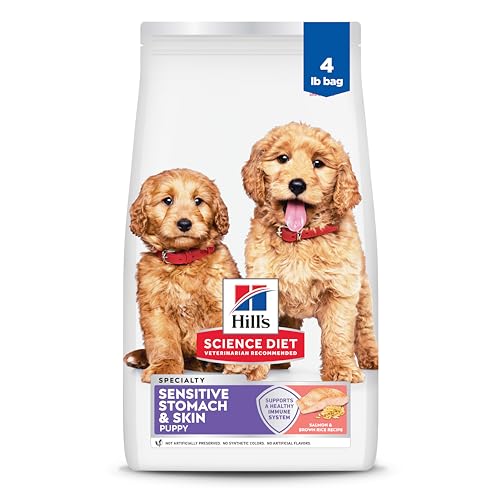
Hill’s Science Diet Puppy Sensitive Stomach Dry Dog Food
Hill’s Science Diet Puppy Sensitive Stomach & Skin Dry Dog Food is a smart choice if your puppy needs gentle nutrition for digestion and skin support. It features a salmon and brown rice recipe with highly digestible ingredients, prebiotic fiber, and balanced microbiome support that can help ease occasional tummy upsets. The formula also includes omega-3s, omega-6s, vitamin E, and DHA to support healthy skin, a shiny coat, and brain and eye development. High-quality protein helps build lean muscles, while clinically proven antioxidants support immune health. It is made in the USA.
- Food Form:Dry food
- Flavor:Salmon & brown rice
- Life Stage:Puppy
- Bag Size:4 lb bag
- Grain Status:Limited ingredient
- Skin Support:Omega 3/6
- Additional Feature:Prebiotic fiber support
- Additional Feature:DHA from fish oil
- Additional Feature:Clinically proven antioxidants
Blue Buffalo Basics Grain-Free Salmon Dog Food
Blue Buffalo Basics Grain-Free Salmon Dog Food is a smart choice for dogs with sensitive stomachs or itchy skin. It features real salmon as the first ingredient and a limited-ingredient, grain-free recipe. This formula provides natural ingredients that support gentle digestion, while omega 3 and omega 6 fatty acids help nourish the skin and coat. It also includes LifeSource Bits for antioxidant-rich immune support. Because it skips chicken, poultry by-product meals, corn, wheat, and soy, it offers a cleaner formula in a 4-lb bag.
- Food Form:Dry food
- Flavor:Salmon & potato
- Life Stage:Adult
- Bag Size:4 lb bag
- Grain Status:Grain-free
- Skin Support:Omega 3/6
- Additional Feature:LifeSource Bits antioxidants
- Additional Feature:Immune system support
- Additional Feature:Salmon and potato recipe
Blue Buffalo Adult Dry Dog Food Salmon & Brown Rice
If your adult dog has sensitive skin and does best on a chicken-free recipe, this Blue Buffalo Life Protection Formula Adult Dry Dog Food with salmon and brown rice is a strong choice. It features real salmon as the first ingredient, along with no corn, wheat, soy, or artificial preservatives. The formula uses high-quality protein to help build and maintain strong muscles, while omega 3 and omega 6 fatty acids support skin and coat health. LifeSource Bits add antioxidants, vitamins, and minerals for immune support. This 5 lb dry kibble suits small, medium, and large adult dogs.
- Food Form:Dry kibble
- Flavor:Salmon & brown rice
- Life Stage:Adult
- Bag Size:5 lb bag
- Grain Status:Grain-free
- Skin Support:Omega 3/6
- Additional Feature:Chicken-free recipe
- Additional Feature:Strong muscle support
- Additional Feature:Natural ingredients only
Purina Pro Plan Sensitive Skin & Stomach Dog Food
Purina Pro Plan Sensitive Skin & Stomach Dog Food is a strong pick for senior dogs that need gentle digestion and skin support, especially if you want a formula built around salmon, rice, and oatmeal. You get salmon as the first ingredient, plus 29% protein to help maintain lean muscle. Oatmeal, rice, and natural prebiotic fiber support easier digestion and better stool quality. Sunflower oil adds omega-6s for skin and coat health, while fish oil and glucosamine support joints and mobility. It is also free of corn, wheat, soy, eggs, and poultry by-product meal.
- Food Form:Dry kibble
- Flavor:Salmon & rice
- Life Stage:Senior
- Bag Size:4 lb bag
- Grain Status:Limited ingredient
- Skin Support:Omega 6 + fish oil
- Additional Feature:29% protein
- Additional Feature:Glucosamine for joints
- Additional Feature:Heart health support
DIAMOND CARE Dry Dog Food Sensitive Skin 8lb
DIAMOND CARE Dry Dog Food Sensitive Skin 8lb is a strong option for adult dogs with skin sensitivities or allergies, especially if you want a limited ingredient, grain free formula. It uses hydrolyzed salmon as the single animal protein, along with peas, potato free carbohydrates, and no artificial colors. Its omega 3 and omega 6 fatty acids can help support a healthy coat and calmer skin, while probiotics aid digestion. Vitamin E antioxidants add immune support. This dry kibble suits all breed sizes, and the family owned brand makes it in the USA with quality ingredients.
- Food Form:Dry kibble
- Flavor:Hydrolyzed salmon
- Life Stage:Adult
- Bag Size:8 lb bag
- Grain Status:Grain-free
- Skin Support:Omega 3/6 + probiotics
- Additional Feature:Hydrolyzed salmon protein
- Additional Feature:Probiotics for digestion
- Additional Feature:Potato-free formula
Factors to Consider When Choosing Dog Food for Dogs With Sensitive Skin
When choosing dog food for sensitive skin, look for limited ingredient formulas that make it easier to identify and avoid common triggers. You can also consider novel protein sources, grain free options, omega fatty acids, and digestive support ingredients to help support your dog’s skin and overall comfort. By checking these factors, you will have a better chance of finding food that works for your dog.
Limited Ingredient Formulas
Limited ingredient formulas can make it easier to feed a dog with sensitive skin because they use fewer ingredients, which may help reduce potential triggers. You will often see one main animal protein, such as lamb or salmon, so you can identify and avoid ingredients that seem to bother your dog. Many recipes skip common fillers and allergens, including corn, wheat, soy, and poultry by product meals. Some are grain free and use potatoes, peas, or rice instead, which keeps the diet simple while still providing energy. You can also look for formulas with omega 3 and omega 6 fatty acids plus antioxidants, since these nutrients may support skin comfort, coat health, and immune function. Keep the ingredient list short and watch how your dog responds.
Novel Protein Sources
Novel proteins can be a smart choice when your dog reacts to common ingredients like chicken, beef, or dairy. You can reduce the chance of skin flare-ups by choosing formulas centered on one clearly named animal protein. Look for limited protein diets because they make it easier to spot and avoid troublemakers. Salmon and lamb often work well in sensitive skin recipes since they deliver essential amino acids while staying different from the proteins in many standard foods. Keep the ingredient list simple too, because fewer animal proteins and additives can mean fewer immune triggers. When you switch, do it gradually over 7 to 10 days so your dog’s stomach adjusts and you can watch for calmer skin.
Grain-Free Options
If your dog still reacts to common ingredients, grain-free food can be another helpful option for sensitive skin. You can avoid corn, wheat, and soy, which often cause trouble for dogs with dietary sensitivities. Many grain-free recipes replace those grains with potatoes or peas, giving your dog energy without the usual triggers. If you want to narrow things down further, choose a limited ingredient grain-free formula with just a few components and one animal protein source. That simpler approach can make it easier to spot what works. Don’t forget to check that the food is nutritionally complete, with added vitamins, minerals, and antioxidants. That way, you are supporting your dog’s skin and overall health at the same time, without unnecessary extras.
Omega Fatty Acids
Omega-3 and omega-6 fatty acids are important when choosing food for a dog with sensitive skin because they help support the skin barrier and promote a healthier coat. Omega-6 is often linked to skin and coat support, while omega-3s provide additional nourishment. When these fats are balanced, they can help reduce dryness and leave your dog’s coat softer and shinier. Look for formulas that list clear amounts of omega-3 and omega-6 instead of vague “skin support” marketing. Ingredients such as fish oil or sunflower oil can provide these nutrients in a practical way. If your dog’s skin flares up easily, a food with stated omega levels gives you a better chance of choosing a diet that truly supports comfort and coat health.
Digestive Support Ingredients
Digestive support ingredients matter because a dog with sensitive skin often does better on food that is easy to process and gentle on the stomach. You should look for highly digestible proteins and carbohydrates such as salmon, lamb, rice, or oatmeal, since they can help your dog process meals more comfortably. Prebiotic fiber can also support beneficial gut bacteria and help keep the microbiome balanced, which may improve digestive comfort. When your dog’s stomach is easily upset, a limited ingredient diet can simplify meals and reduce digestive burden. Some dogs also do better on grain-free or potato-free recipes, although tolerance varies. Formulas for sensitive stomachs often combine digestible proteins, fibers, and fats to support stool quality and better nutrient absorption, helping your dog feel and function better overall.
Artificial Additive Avoidance
When you choose dog food for sensitive skin, avoid formulas with artificial colors, flavors, and preservatives. Simpler ingredient lists can make it easier to identify irritants and spot possible triggers. Look for foods labeled natural and free from added synthetic additives, because those recipes are usually more predictable for sensitive dogs. Avoid unnecessary fillers and extra flavoring agents that can obscure the source of a reaction. Clear ingredient panels help you keep your dog’s diet consistent and make it easier to track whether the skin is improving. The fewer artificial ingredients you feed, the easier it is to narrow down possible triggers and support a calmer, more manageable routine for your dog’s skin.
Life Stage Needs
Your dog’s life stage matters just as much as sensitive-skin support, because puppies, adults, and seniors need different calorie, protein, and nutrient levels. When you feed a puppy, look for a formula with DHA, extra energy, and growth focused nutrients that support brain and eye development. For an adult dog, choose a balanced maintenance diet that helps keep muscle, energy, and skin in good shape without overdoing calories. When your dog is a senior, prioritize easier digestion, lean muscle support, and mobility friendly nutrition, since older dogs often process food differently. Matching the food to your dog’s age helps you protect skin while still meeting general nutritional needs, so you are not forcing one formula to do every job at once.
Breed Size Fit
Breed size should shape your choice just as much as skin support, because small, medium, and large dogs do not need the same calorie density or kibble size. Match the food’s nutrient density to your dog’s frame: small breeds often need more calories packed into each bite, while bigger dogs usually do better with a less dense formula. Check kibble or wet food pieces too, since tiny mouths handle smaller pieces best and large jaws may need larger ones for easier chewing. Always confirm the feeding guide fits your dog’s life stage and size. If you have a very small dog, portion controlled packs can keep food fresh and help you measure meals. For large or giant breeds, keep calories in check while still supporting sensitive skin.
Frequently Asked Questions
How Quickly Should I Expect Skin Improvements After Switching Foods?
You’ll usually spot changes in 4 to 8 weeks, but the real surprise comes later. Itching may ease first, while skin and coat improvements can take 8 to 12 weeks. If you do not see progress, call your vet.
Can Treats Worsen My Dog’s Sensitive Skin Problems?
Yes, treats can worsen your dog’s sensitive skin when they contain triggers like chicken, beef, wheat, or artificial additives. Read labels carefully, limit extras, and choose simple, hypoallergenic treats instead.
Should I Avoid Certain Proteins Beyond Chicken and Beef?
Yes, you should avoid other common triggers like lamb, dairy, egg, and fish whenever your dog reacts. Try novel or hydrolyzed proteins, watch labels closely, and change foods one at a time.
Is It Safe to Rotate Between Sensitive Skin Dog Foods?
Yes, you can rotate them safely if you switch gradually and your dog tolerates each formula. Keep ingredients similar, watch for itchiness, and ask your vet before changing proteins often.
When Should I See a Vet Instead of Changing Food?
See a vet if your dog’s itching is severe, persistent, or worsening, or if you notice hair loss, sores, ear infections, vomiting, or diarrhea. Do not keep switching foods without medical guidance.